



Plutonium Element Cube (Trinitite Sample)
$99.99$108.12
The Trinity bomb experiment was the first test of a nuclear weapon developed by the United States. Conducted on July 16, 1945, in the Jornada del Muerto desert near Alamogordo, New Mexico, the bomb was a plutonium implosion-type device with a yield of approximately 20 kilotons of TNT. The test was led by physicist J. Robert Oppenheimer, who oversaw the development of the bomb as part of the Manhattan Project.
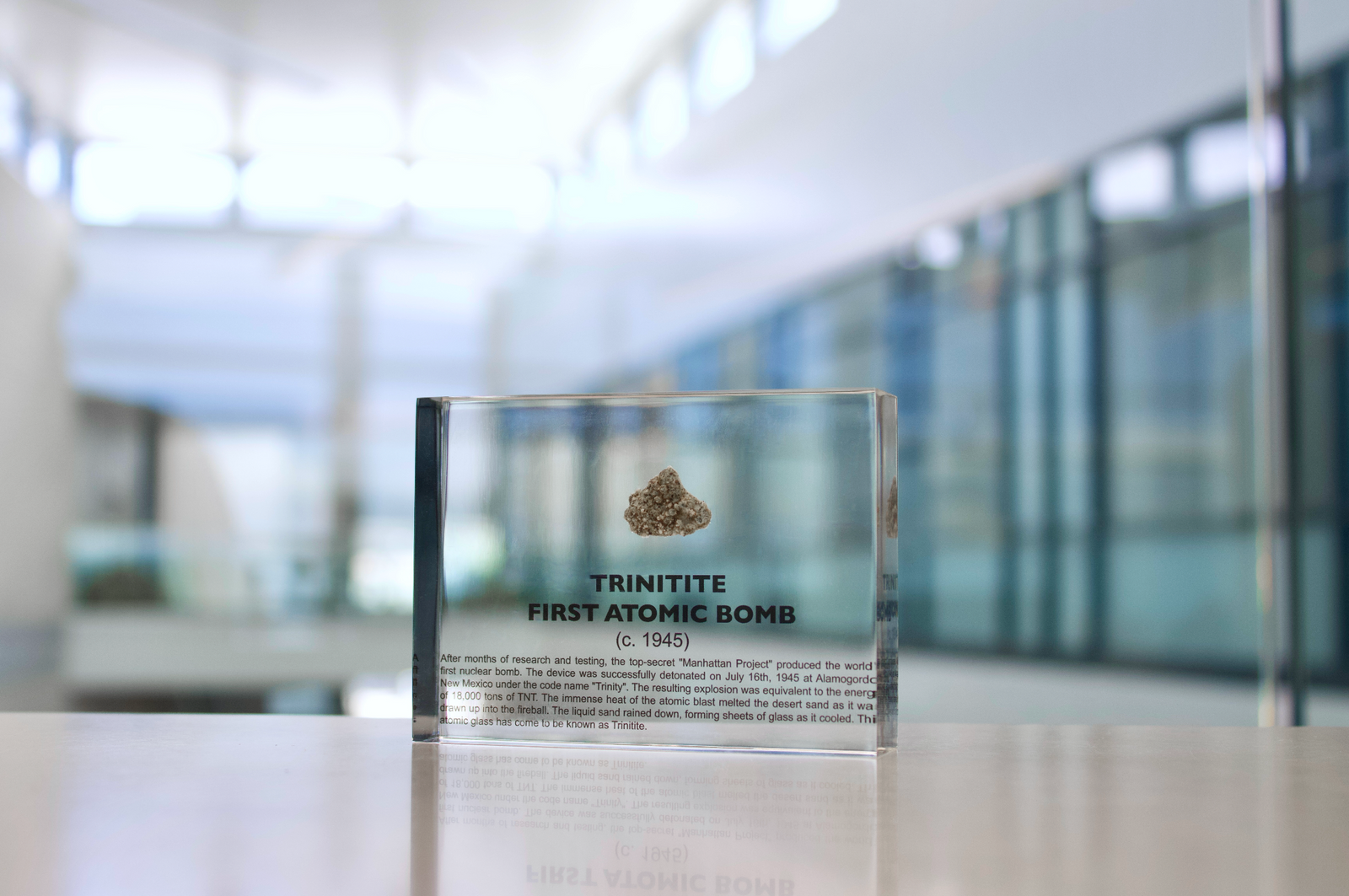
The bomb was detonated at 5:29:45 a.m. local time, and the explosion generated a bright flash of light, followed by a massive fireball and mushroom cloud that reached over 41,000 feet in height. The temperature at the center of the Trinity bomb is estimated to have been several million degrees Celsius. The intense heat generated by the blast caused the sand in the surrounding area to fuse together forming a radioactive green glass called Trinitite.
The blast also created a crater over 1,200 feet wide and 150 feet deep. The test was a success, and the bomb's explosive power exceeded expectations.
The Trinity test marked the first time a nuclear weapon had been detonated and was a significant moment in the history of nuclear weapon development. The test provided valuable information about the behavior of nuclear weapons and helped pave the way for the development of more advanced nuclear weapons.
The trinitite that was formed contains small amounts of radioactive isotopes, primarily plutonium and americium. Not all of the plutonium core actually participated in the nuclear chain reaction. The remainder of the plutonium that did not react was vaporized and infused into the trinitite that was formed.
Please note that this item might be classified as hazardous material in certain countries. We suggest checking local guidelines to ensure compliance before placing your order.
About This Element Sample
FACTS:
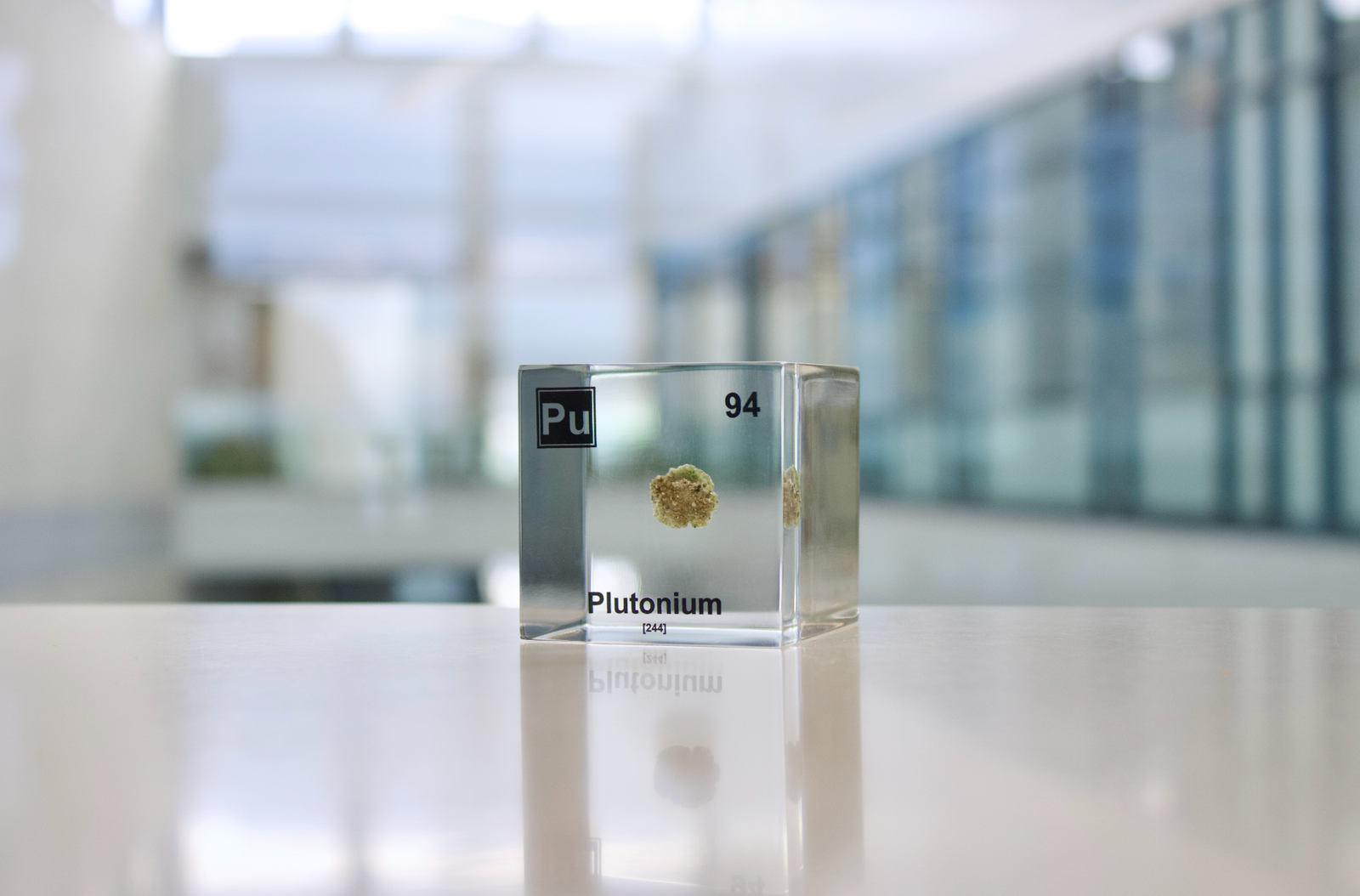
This cube contains Trinitite glass formed by the Trinity test, the world's first nuclear detonation, with a trace of the unreacted plutonium from the bomb's core fused into it. Not all of the plutonium in the original device actually underwent fission; the leftover plutonium vaporized in the blast and became infused into the glass as it cooled, which is why plutonium-bearing Trinitite exists at all.
What's Included & Materials
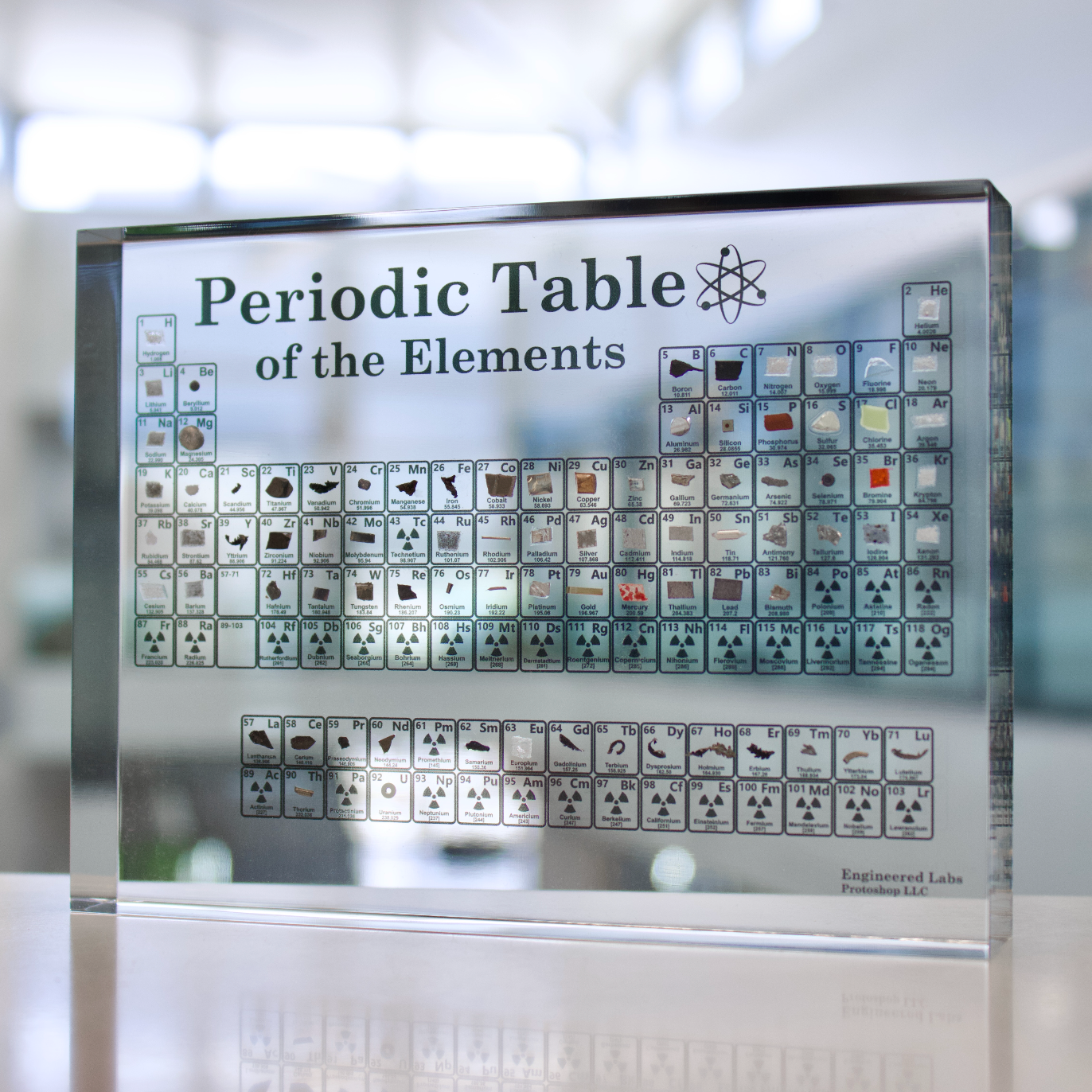
A plutonium-bearing Trinitite sample embedded in a clear acrylic cube.
Dimensions
2.0 x 2.0 x 2.0 in
Country of Origin
Made in the USA
Safety Notes
This sample is naturally radioactive, but it is stabilized and permanently sealed in clear acrylic, which blocks essentially all alpha particles and most beta emission. It is safe for display in a home or office, the same way similar specimens are shown in museums worldwide. Radiation exposure from handling it is comparable to (or less than) what you would receive on a commercial airline flight. Some countries classify naturally radioactive minerals as hazardous material for customs and import purposes, so checkout may show a hazmat disclaimer; this is a compliance label only and does not mean the sealed sample poses a safety risk.
Care Guide
Wash with mild soap or detergent and lukewarm water. Use a clean, soft cloth, or sponge. Rinse and blot dry with a damp cloth or chamois.
Never use abrasive cleaners, household cleaners, window-cleaning fluids, scouring compounds, gritty cloths, or strong solvents such as alcohol, acetone, carbon tetrachloride, etc.
To maintain the brilliant luster of acrylic, wax occasionally with a quality grade of automobile paste wax (not a cleaner wax combination). Apply a thin coat with a clean, cotton flannel cloth. Then wipe with a clean damp cloth. Never use household spray waxes.
Proudly made in the U.S.A.