



Thorium Element Cube
$61.44$66.81
Thorium's atomic number is 90 and its symbol is Th. Thorium is silvery and tarnishes black when it is exposed to air, forming thorium dioxide; it is moderately soft, malleable, and has a high melting point. All known thorium isotopes are unstable. The most stable isotope, 232Th, has a half-life of 14.05 billion years, or about the age of the universe
Thorium was discovered in 1828 by the Norwegian amateur mineralogist Morten Thrane Esmark and identified by the Swedish chemist Jöns Jacob Berzelius, who named it after Thor, the Norse god of thunder. Some uses for thorium include heat-resistant ceramics, aircraft engines, and in light bulbs.
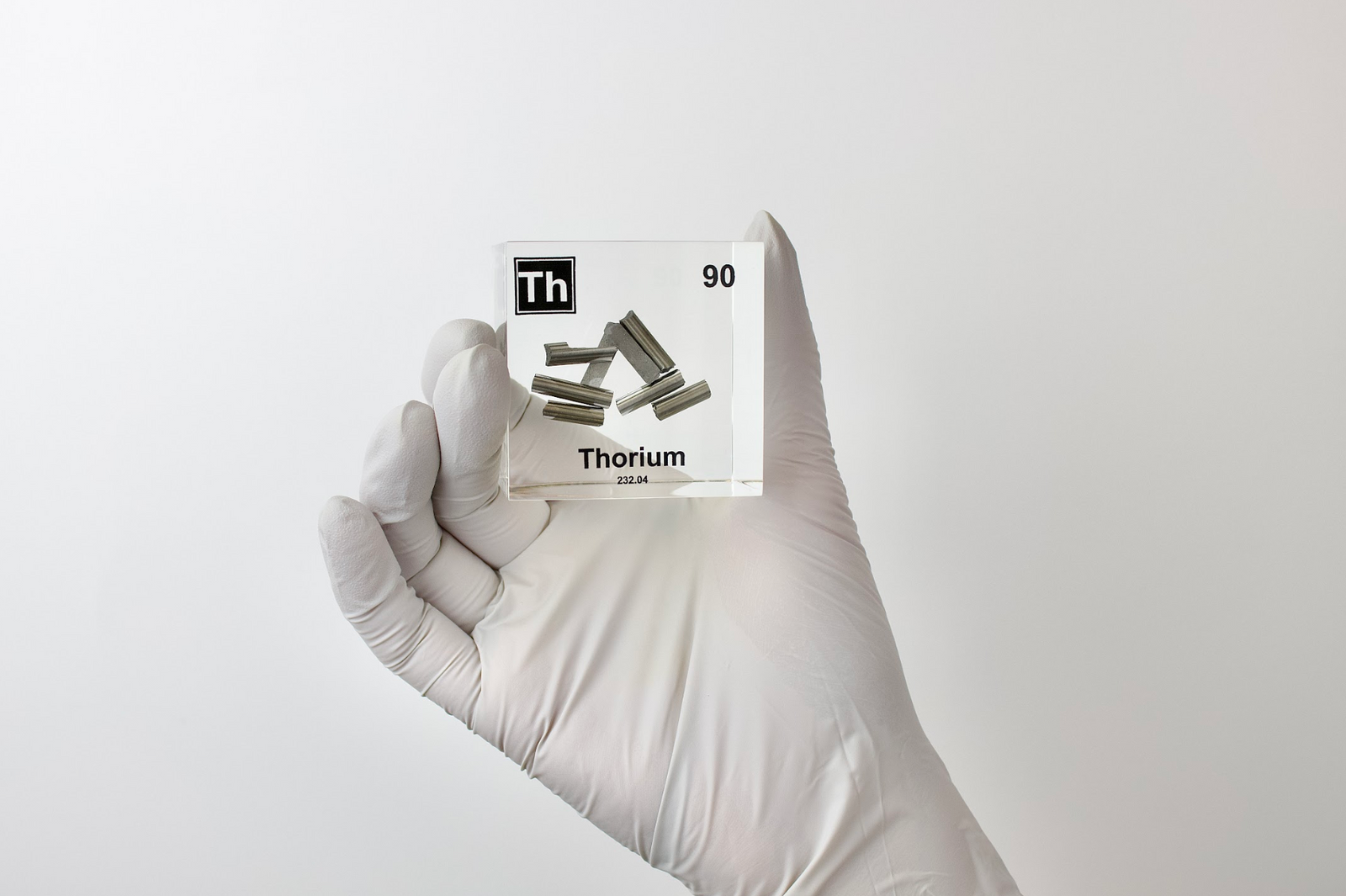
This display is contained within crystal clear lucite acrylic.
Please note that this item might be classified as hazardous material in certain countries. We suggest checking local guidelines to ensure compliance before placing your order.
About This Element Sample
FACTS:
Thorium was discovered in 1828 by Norwegian mineralogist Morten Thrane Esmark and identified by Swedish chemist Jöns Jacob Berzelius, who named it after Thor, the Norse god of thunder. It tarnishes black in air as it forms thorium dioxide. Its most stable isotope, thorium-232, has a half-life of about 14.05 billion years, roughly the age of the universe itself, and it has historically been used in heat-resistant ceramics, aircraft engines, and light bulbs.
What's Included & Materials
A thorium metal sample embedded in crystal-clear Lucite acrylic.
Dimensions
2.0 x 2.0 x 2.0 in
Country of Origin
Made in the USA
Safety Notes
This sample is naturally radioactive, but it is stabilized and permanently sealed in clear acrylic, which blocks essentially all alpha particles and most beta emission. It is safe for display in a home or office, the same way similar specimens are shown in museums worldwide. Radiation exposure from handling it is comparable to (or less than) what you would receive on a commercial airline flight. Some countries classify naturally radioactive minerals as hazardous material for customs and import purposes, so checkout may show a hazmat disclaimer; this is a compliance label only and does not mean the sealed sample poses a safety risk.
Care Guide
Wash with mild soap or detergent and lukewarm water. Use a clean, soft cloth, or sponge. Rinse and blot dry with a damp cloth or chamois.
Never use abrasive cleaners, household cleaners, window-cleaning fluids, scouring compounds, gritty cloths, or strong solvents such as alcohol, acetone, carbon tetrachloride, etc.
To maintain the brilliant luster of acrylic, wax occasionally with a quality grade of automobile paste wax (not a cleaner wax combination). Apply a thin coat with a clean, cotton flannel cloth. Then wipe with a clean damp cloth. Never use household spray waxes.
Proudly made in the U.S.A.