



Radium Element Cube
$118.56
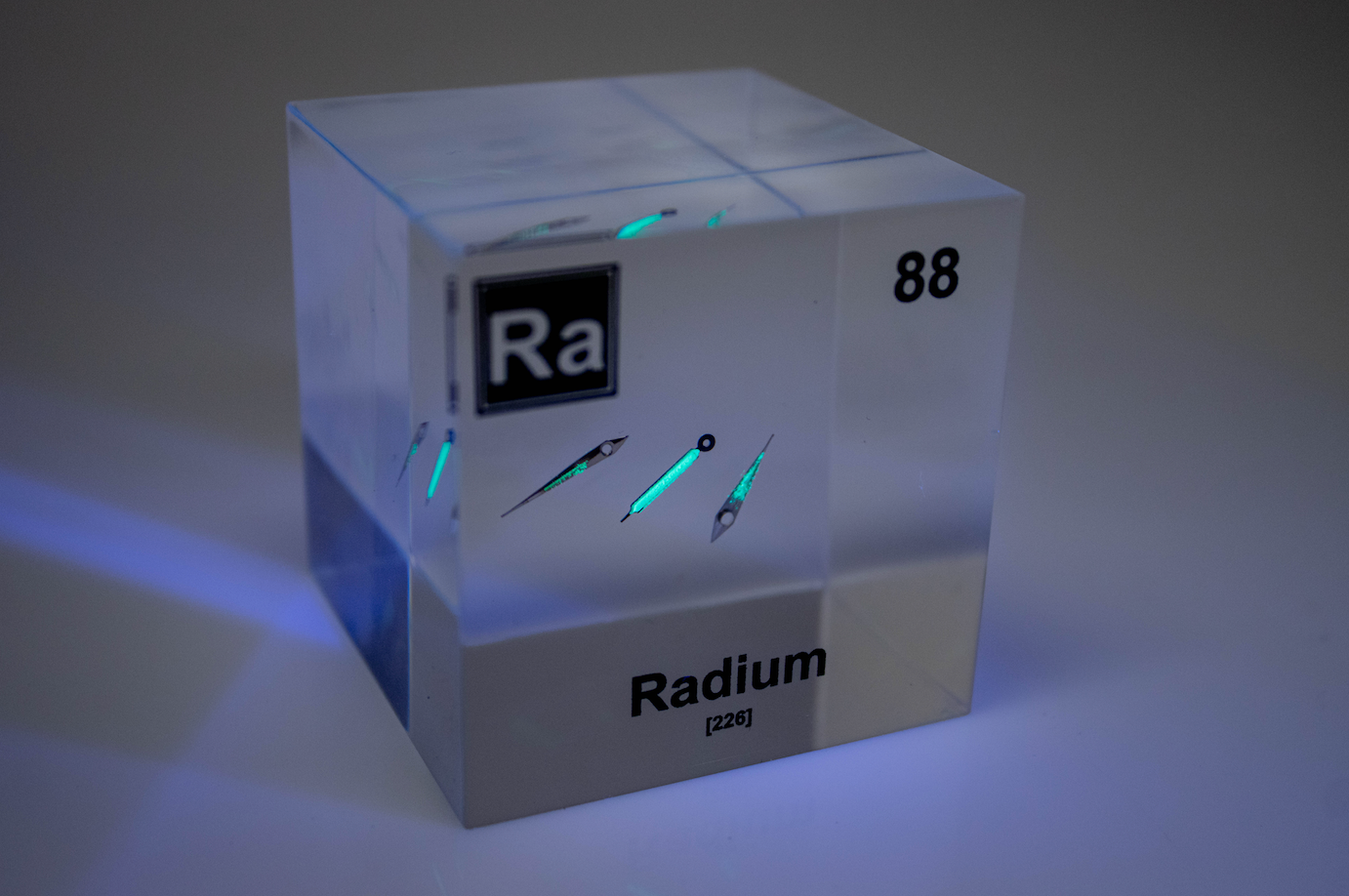
Radium is a chemical element with the symbol Ra and atomic number 88. This sample is an antique radium clock hand. The radium no longer glows but is still slightly radioactive. This sample is safe. The amount of radiation emitted from this cube is less than what you would receive on an airline flight. It is also legal to ship internationally due to the fact that it is an antique.
Radium is the sixth element in group 2 of the periodic table, also known as alkaline earth metals. Pure radium is silvery-white, but it readily reacts with nitrogen (rather than oxygen) on exposure to air, forming a black surface layer of radium nitride (Ra3N2). All isotopes of radium are highly radioactive, with the most stable isotope being radium-226, which has a half-life of 1600 years and decays into radon gas (specifically the isotope radon-222). When radium decays, ionizing radiation is a product, which can excite fluorescent chemicals and cause radioluminescence.
Please note that this item might be classified as hazardous material in certain countries. We suggest checking local guidelines to ensure compliance before placing your order.
About This Element Sample
FACTS:
This sample is an antique radium-painted clock hand. The original luminescent paint has long since decayed, so the hand no longer glows, but the radium itself is still slightly radioactive, a hands-on illustration of how early 20th-century clock and watch dials used radioluminescent paint. Because this is a genuine antique, it is legal to ship internationally even though modern radium sources face tighter shipping restrictions, and radiation emitted from the cube is less than what you'd receive on a commercial airline flight.
What's Included & Materials
An antique radium-painted clock hand set in clear acrylic.
Dimensions
2.0 x 2.0 x 2.0 in
Country of Origin
Made in the USA (Saint Anthony, Idaho)
Safety Notes
This sample is naturally radioactive, but it is stabilized and permanently sealed in clear acrylic, which blocks essentially all alpha particles and most beta emission. It is safe for display in a home or office, the same way similar specimens are shown in museums worldwide. Radiation exposure from handling it is comparable to (or less than) what you would receive on a commercial airline flight. Some countries classify naturally radioactive minerals as hazardous material for customs and import purposes, so checkout may show a hazmat disclaimer; this is a compliance label only and does not mean the sealed sample poses a safety risk.
Care Guide
Wash with mild soap or detergent and lukewarm water. Use a clean, soft cloth, or sponge. Rinse and blot dry with a damp cloth or chamois.
Never use abrasive cleaners, household cleaners, window-cleaning fluids, scouring compounds, gritty cloths, or strong solvents such as alcohol, acetone, carbon tetrachloride, etc.
To maintain the brilliant luster of acrylic, wax occasionally with a quality grade of automobile paste wax (not a cleaner wax combination). Apply a thin coat with a clean, cotton flannel cloth. Then wipe with a clean damp cloth. Never use household spray waxes.
Proudly made in the U.S.A.