
The Ultimate Lab Coat Guide: 5 Types Every Scientist Should Know
After spending three years researching lab coats and surveying over 1,500 scientists in what I call "The Lab Coat Project," I've discovered something troubling: most of us are wearing the wrong lab coat. Whether you're a college student starting your first chemistry lab or a seasoned researcher working with hazardous materials, the lab coat you choose could be the difference between minor inconvenience and serious injury.
Let me break down the five major classes of lab coats you'll encounter, so you can make an informed decision that keeps you safe and comfortable in the lab.
If you prefer the video version, you can watch that below:
Class 1: The Polyester Trash Bags (Danger!)
You've seen these on Amazon—usually under $25, sometimes lurking in college bookstores with hefty markups. My survey respondents had colorful descriptions: "looks like I'm wearing a potato sack," "I see a white rectangle in the mirror," and my personal favorite, "basically just wearing a tent."
But here's the real problem: these aren't just unflattering - they're dangerous. Most contain over 60% polyester, which melts and hardens onto your skin when exposed to heat or flames. I've done side-by-side burn tests comparing polyester to 100% cotton, and the difference is stark. Cotton burns and disintegrates into ash; polyester creates a molten trap.
Consider the flash fire risks in your lab: metal powders, oxidizing agents, flammable solvents, exothermic reactions, gas line leaks, even sparks from hot plate wiring. That athletic wear you love? Same problem. Leave the polyester for your weekend workout, not your weekday research.
Other red flags include large plastic buttons (which can melt/decompose and trap you during emergencies), wide-open cuffs that expose your wrists to chemical splashes, and unisex sizing that, as one survey respondent noted, creates "a strange imposter syndrome that whispers in your ear, you're not a real scientist."

Class 2: The Better Basics (Improved, not perfect)
Moving up to the $25-$45 range, you'll find lab coats with more thoughtful design like some metal snaps, knit cuffs, and maybe even full-length coverage near your knees. But most still aren't 100% cotton, which remains the most common recommendation for general and organic chemistry labs.
Let's clarify the most typical college chemistry lab requirements:
-
100% cotton construction to reduce burn risk
-
Length within a few inches of your knees (35-37" for 5' height, 41-43" for 6' height)
-
Metal snap closures to escape quickly
-
Long knit cuffs to protect wrists when reaching
-
High collar that can button to the top (sometimes specified as "Howie style")
The challenge? Finding lab coats under $100 that actually meet these requirements. Many popular options on Amazon check some boxes while failing catastrophically on others. For example, one best-selling option has metal snaps and cuffs but is 80% polyester. Another top-rated option is a well-fitting women's coat that's dangerously short with plastic buttons and a wide open chest.
Pro tip: If you see stethoscopes or scrubs in the product photos, run. These are healthcare coats, not laboratory safety equipment.

Class 3: The 100% Cotton Highly Functional Solution
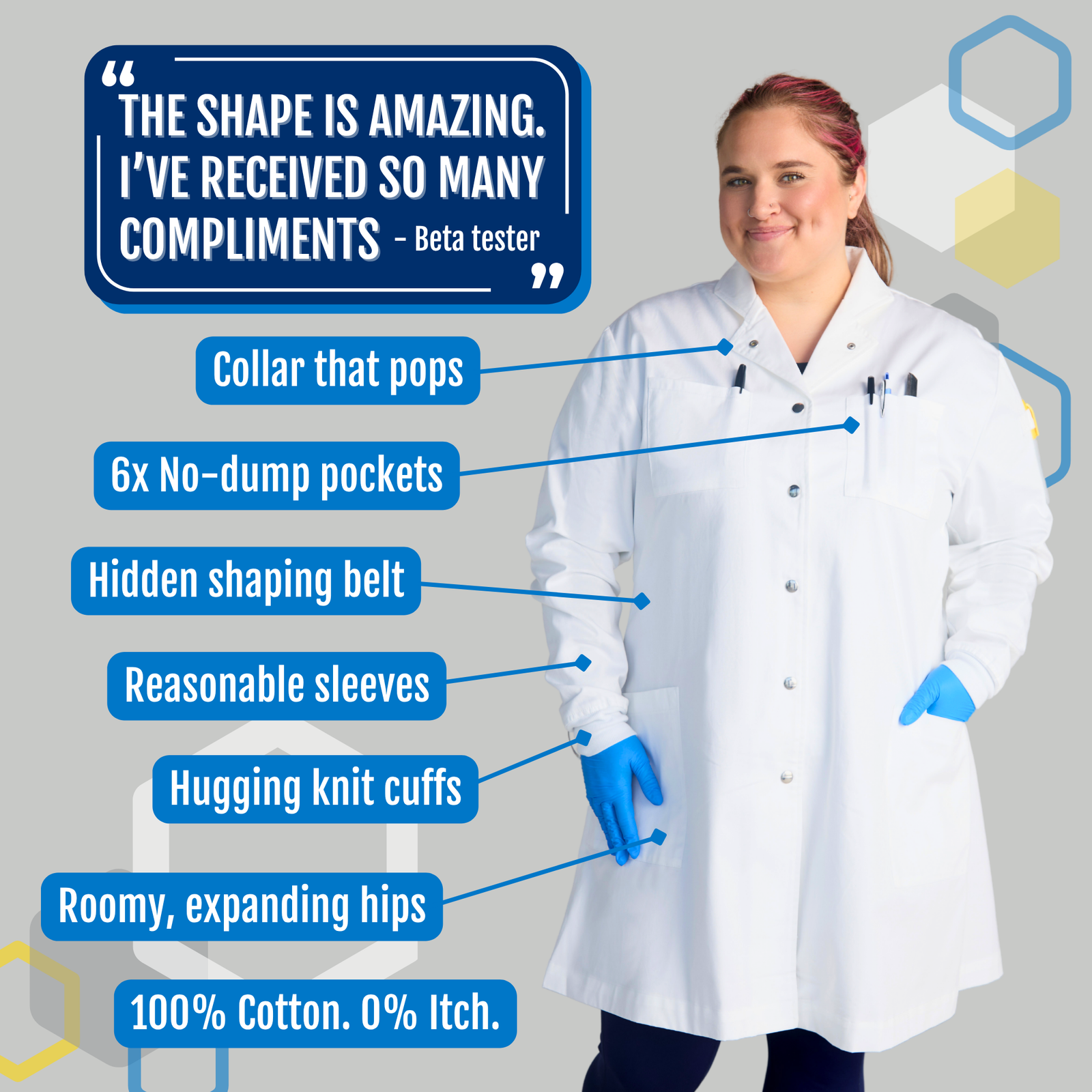
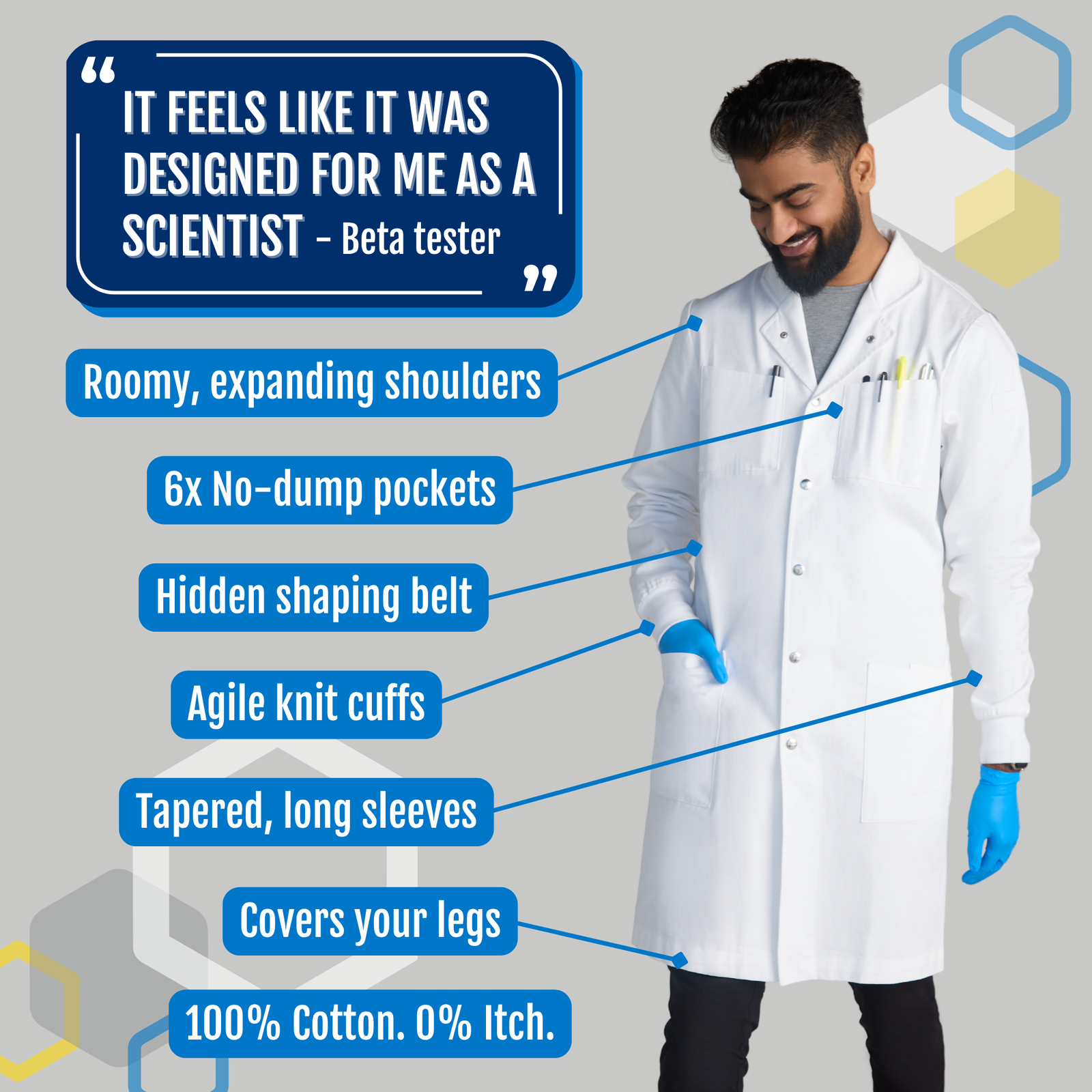
When we couldn't find a reasonably priced lab coat that met most scientists' actual needs, I decided to design one based on our survey data. The result combines common safety requirements with new, functional features that 1,500+ scientists specifically requested.
Key features include:
-
100% cotton with custom twill weave for puncture resistance
Lab Coat Materials Ultimate Guide -
Mildly hydrophobic surface for water, blood, and coffee splash resistance
-
Separate men's and women's cuts (no "unisex" compromises)
The Hidden Hazards of Lab Coats on Mental Health in Women -
Stainless steel snaps that won't melt, rust, or corrode
Survey Says: Snaps Beat Buttons 3-to-1 in Lab Coat Preference -
Long knit cuffs with tapered fit to prevent sleeves catching while covering wrists
Lab Coats With Knit Cuffs vs Open Cuffs (What's Best for Scientists?) -
Convertible high collar for comfort or protection
Why The Howie Collar Might Just Save Your Neck -
Hidden features: zippered side vents, dedicated utensil slots, adjustable belt

Beyond white, we discovered that 40% of scientists wanted color options. Black topped the list, particularly popular for its ability to hide permanent stains while still showing contamination from white powders or biological materials. Plus, they just look AWESOME.
Color considerations for your lab:
-
White: Shows contamination clearly but reveals permanent stains
-
Blue: Often indicates flame resistance (verify on labels)
-
Black: Hides stains, shows white contamination well
-
Color coding: Some labs use colors to prevent cross-contamination or signal safety features

Class 4: The Doctor's White Coat (Dangerous for Scientists)
High-end medical coats ($100-$250) from brands like Medelita and Figs are beautifully tailored with premium materials and sophisticated design. But they're optimized for clinical settings, not laboratory research.
Critical differences:
-
Length: Typically only covers to mid-thigh, inadequate for lab work
-
Closure: Designed to be worn open with decorative plastic buttons
-
Cuffs: Straight-cut open sleeves, don't protect wrists during reaching
-
Materials: Often antimicrobial-coated synthetics or spandex blends that burn violently
-
Cost: Designed to last 5-10 years in clean clinical environments, not replace annually after lab abuse
If you work in healthcare, these coats excel at their intended purpose. But for laboratory scientists, they represent an expensive compromise of safety for style.

Class 5: The Specialty Materials (When You Need Maximum Protection)
For high-risk chemistry, these $100-$300 labcoats in distinctive light blue or navy represent the pinnacle of laboratory protection. The magic lies in advanced materials, not fancy design.
Flame Resistant (FR) Options
Look for NFPA 2112 certification—these coats pass mannequin flash fire tests with less than 50% second and third-degree burns (50% being the survival threshold). Two main types:
Flame Retardant (Coated) Fabric: 100% cotton or cotton/nylon blends with chemical coatings. These are effective but require careful washing to maintain the material’s protection.
Flame Resistant (Inherent) Fabric: Aramid fibers which naturally resist burning. More forgiving of laundering mistakes but avoid bleach.
Chemical Resistance Reality Check
Despite marketing claims, truly "chemical proof" lab coats don't exist. Every chemical reacts differently with materials. For example, cotton is decent against solvents but dissolves in acids, while polyester resists acids but fails with many solvents.
The best protection against chemical splashes involves:
-
Lab coats that buy you seconds to remove contaminated clothing
-
Chemical-specific aprons for high-risk work
-
Proper glove selection for specific chemicals
The Nomex Aramid Fiber Advantage
After three race car drivers died in fires during the 1960s, DuPont scientist Wilfrid Sweeney developed Nomex: aramid fibers that are similar to Kevlar but optimized for thermal protection.
Nomex IIIA (the current gold standard) blends:
-
93% Nomex for flame resistance
-
5% Kevlar for mechanical strength
-
2% anti-static fibers to prevent spark ignition
Under extreme heat, Nomex swells and forms a char barrier, self-extinguishing while protecting the wearer. It handles temperatures up to 700°F and offers genuine chemical splash resistance to acids and polar solvents (though it fails with non-polar solvents like toluene or hexane).
The Westex Shield CXP fabric represents the current pinnacle. It’s essentially Nomex IIIA in a specialized weave that passes both flame and chemical resistance tests. When you see researchers like NileRed wearing medium blue coats during high-risk experiments, they're likely using this material.

Choosing your lab coat (tips):
For college chemistry students: Class 2 meets some but often not all instructor requirements, but Class 3 provides superior safety and comfort for the long term.
For general research: Class 3 offers the best balance of protection, comfort, and value.
For high-risk chemistry: Class 5 aramid fibers with proper material selection (FR rating, chemical compatibility) becomes essential safety equipment.
For healthcare professionals: Class 4 excels in clinical environments but compromises laboratory safety.
Remember, your lab coat is safety equipment first, clothing second. The most dangerous lab coat is the one that makes you feel unsafe, uncomfortable, or unprofessional if that makes you not wear it consistently.
Choose protection that works for your specific hazards, fits your body properly, and makes you feel confident in your scientific work. If Class 3 meets your requirements, you should test out our newest design from The Lab Coat Project here.
Lab Coats designed by scientists
Our lab coats were designed from the feedback of over 1000 scientists as a part of The Lab Coat Project. Designed specifically for scientific research, especially chemistry and microbiology labs, with high-end features at an affordable price. Buying for a group of 10 or more? Request a group order quote here to access our group discounts.


















Mad Scientist DIY Costume Ideas: How to find a lab coat to win Halloween
Looking to create a Mad Scientist costume that’s more legendary than last-minute? Skip those flimsy party-store outfits with see-through polyester and plastic buttons. No self-respecting villain would wear that garbage. The secret to nailing the Mad Scientist look is starting with a real lab coat, and we’ve got the perfect one.


The Ultimate Lab Coat Guide: 5 Types Every Scientist Should Know
After spending three years researching lab coats and surveying over 1,500 scientists in what I call "The Lab Coat Project," I've discovered something troubling: most of us are wearing the wrong lab coat. Let me break down the five major classes of lab coats you'll encounter, so you can make an informed decision that keeps you safe and comfortable in the lab.


Do Lab Coats Have to Be White?
Ever wondered why lab coats are white? Discover the surprising history behind the iconic garment and why today’s scientists might wear more than just white in the lab.