
Survey Says: Snaps Beat Buttons 3-to-1 in Lab Coat Preference
The Lab is Vast and Full of Peril...
Let’s face it—labs are full of hazards. Depending on your field, you might encounter toxic fumes, corrosive chemicals, open flames, sharp objects, slippery floors, pathogens, allergens, or even radiation.
Lab safety guidelines are in place to minimize these risks, but your last line of defense is your lab coat.
When it comes to how lab coats fasten, not all are created equal. The two most common fastening methods? Plastic buttons and metal snaps (also called press studs, poppers, or snap fasteners).
In our Lab Coat Project survey, metal snaps were preferred three times more than buttons in the top three fields: chemistry, biology, and clinical research. Why exactly do scientists hate on plastic button?

1. Emergency Removal – Seconds Matter
In a lab emergency—whether it’s a chemical spill, fire, or exposure to biohazards—you need to get out of your lab coat as fast as possible. Every second counts to minimize exposure.
-
Plastic buttons require two-handed coordination to undo each one. If you’re temporarily blinded, this can take even longer.
-
Plastic buttons can melt if you’re on fire or splashed with certain chemicals. Try sliding melty buttons through a hole in the fabric when you’re panicked!
-
Snaps, on the other hand, pop open instantly with a single-handed motion.
-
Metal (stainless steel) snaps like those on the Louis and Curie lab coats will not melt in a fire and will not quickly corrode in a chemical exposure.
The NIOSH (National Institute for Occupational Safety and Health) and OSHA (Occupational Safety and Health Administration) stress the importance of quick PPE removal in hazardous environments. In high-risk situations, fumbling with buttons could lead to prolonged exposure and severe injuries.


2. Durability – Lab Coats Should Last
Splashes, flames, spills, and grime—lab coats take a beating as the barrier between you and the dangers of the lab. Add to that the frequent washing that is needed to remove all the week’s (month’s?!) worth of exposure — lab coats really go through a lot. Metal snaps are built to endure these conditions, while plastic buttons are prone to:
-
Melting or warping under high heat in the dryer.
-
Cracking after repeated laundering.
-
Tearing off when caught on equipment or when fastened in the laundry.
A melted or broken button isn’t just an inconvenience—it can become a safety hazard. Misshaped buttons could confine you and make escape difficult, and a missing button leaves the lab coat front partially open, giving a chemical splash a shortcut to your skin.

3. Chemical Resistance – Plastic Isn’t Lab-Safe
Many plastics degrade when exposed to organic solvents, acids, and other lab chemicals. In contrast, stainless steel snaps:
-
Resist corrosion from common lab chemicals.
-
Maintain integrity in autoclaving and sterilization.
-
Do not absorb contaminants, unlike plastic, which can trap residue.
PPE should be made from materials that withstand exposure to harsh chemical environments. A degraded button could mean a compromised coat, putting the wearer at risk.
Given these factors, it’s clear why Genius Lab Gear’s lab coats use stainless steel metal snaps instead of plastic buttons. This means faster removal in emergencies, superior durability, and better resistance to heat and chemicals. It costs a little more, but how much would you pay to save your skin?
BONUS: Want another reason why snaps are better than buttons?
4. Secret Identity Reveal – Because Science Should Be Fun
Ripping off a lab coat in one smooth motion just feels cool. Whether you’re channeling your inner action hero or dramatically ending a long day in the lab to make it home for dinner, snaps make it effortless.
If you’re going to make an entrance (or exit), metal snaps are the only way to go.
🔬 Want a lab coat designed for real scientists? One that’s built for safety, durability, and—yes—even style? Check out Genius Lab Gear’s lab coats today!

Lab Coats designed by scientists
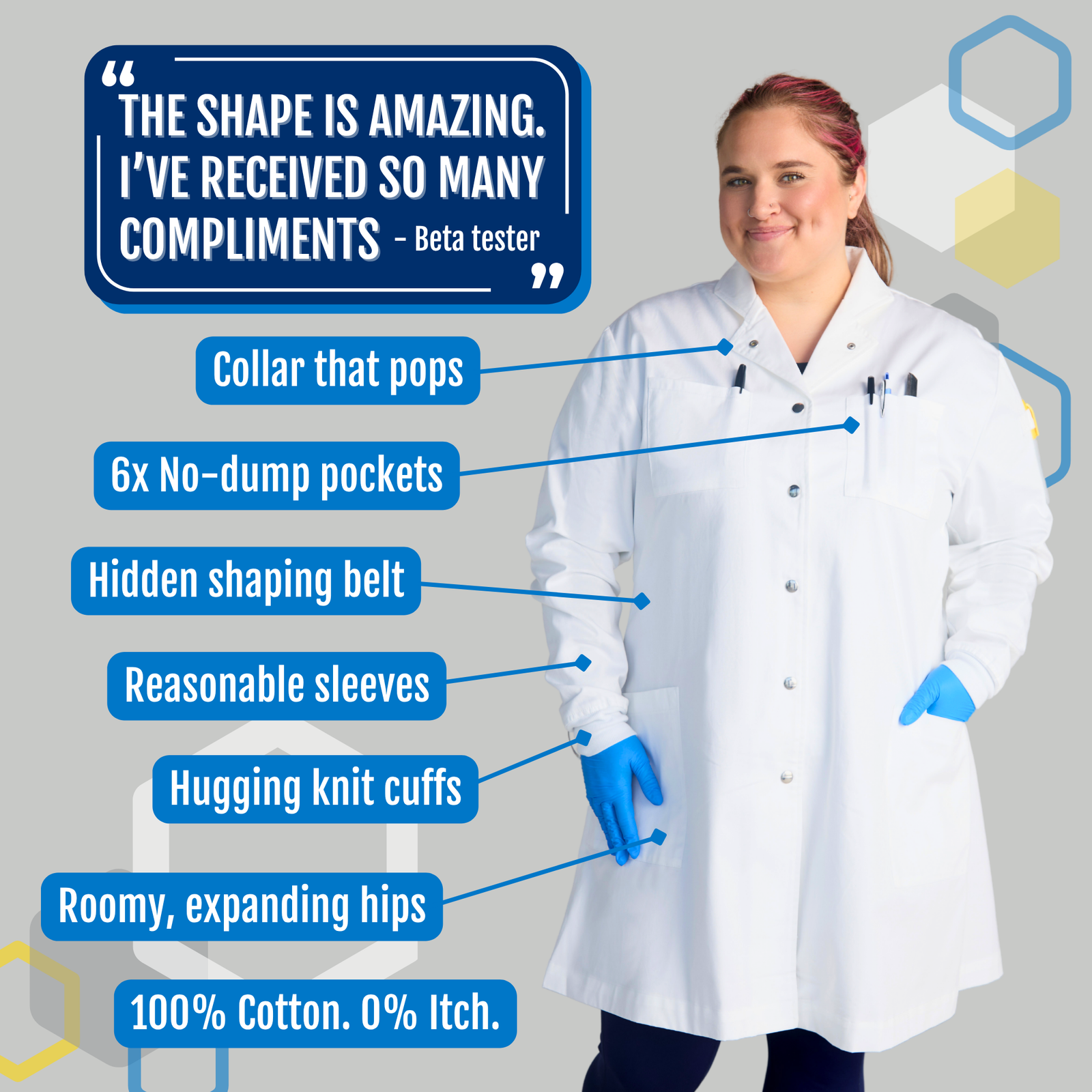
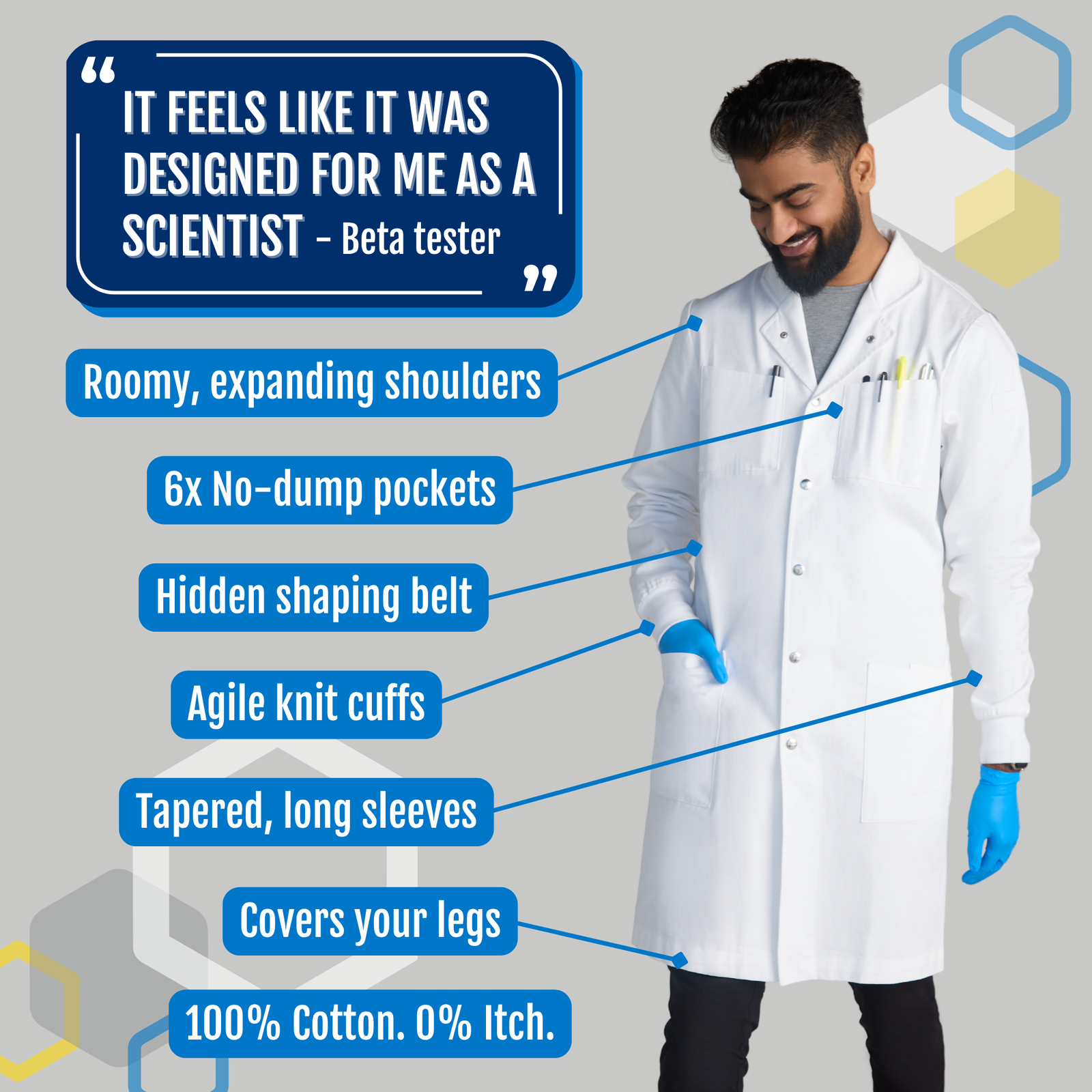
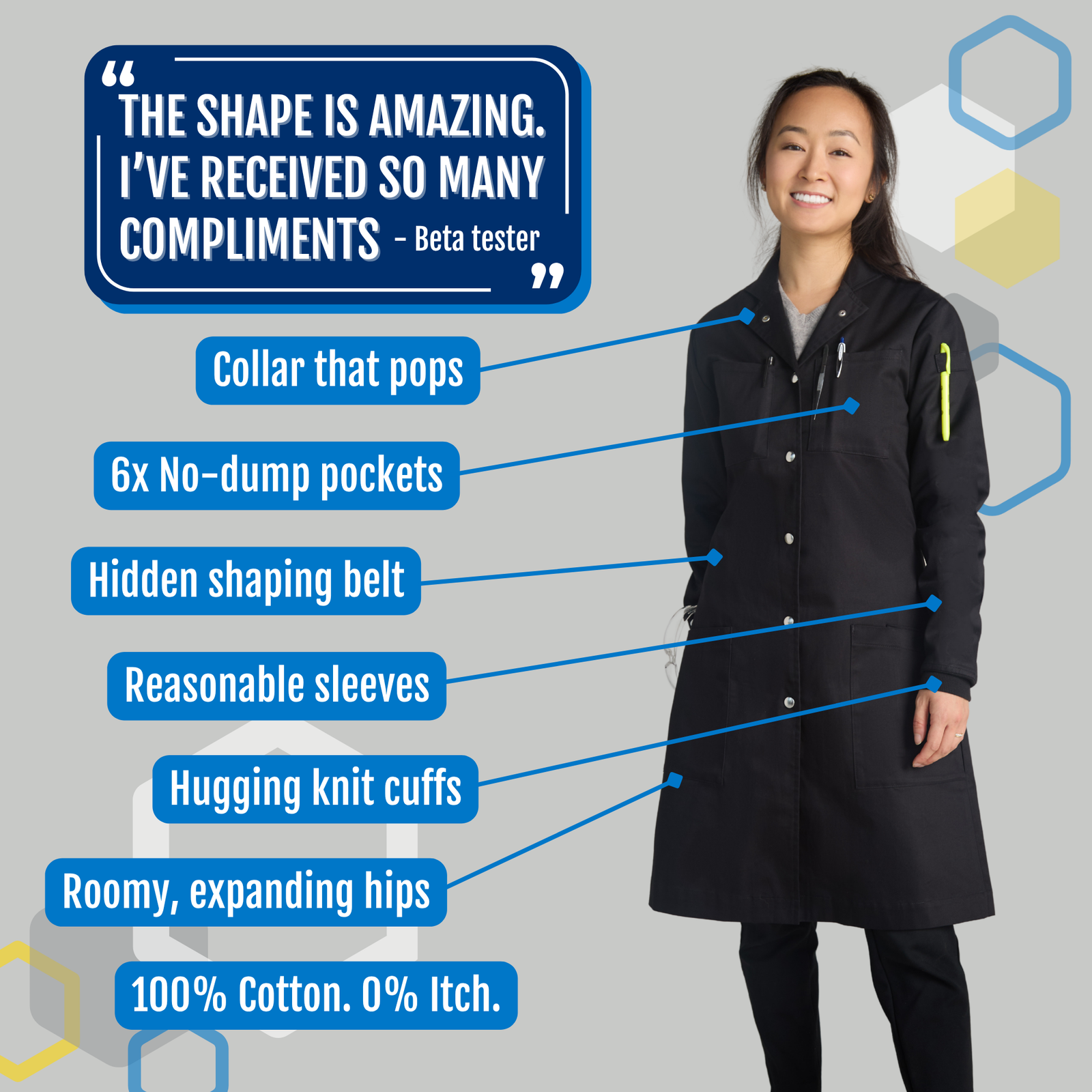
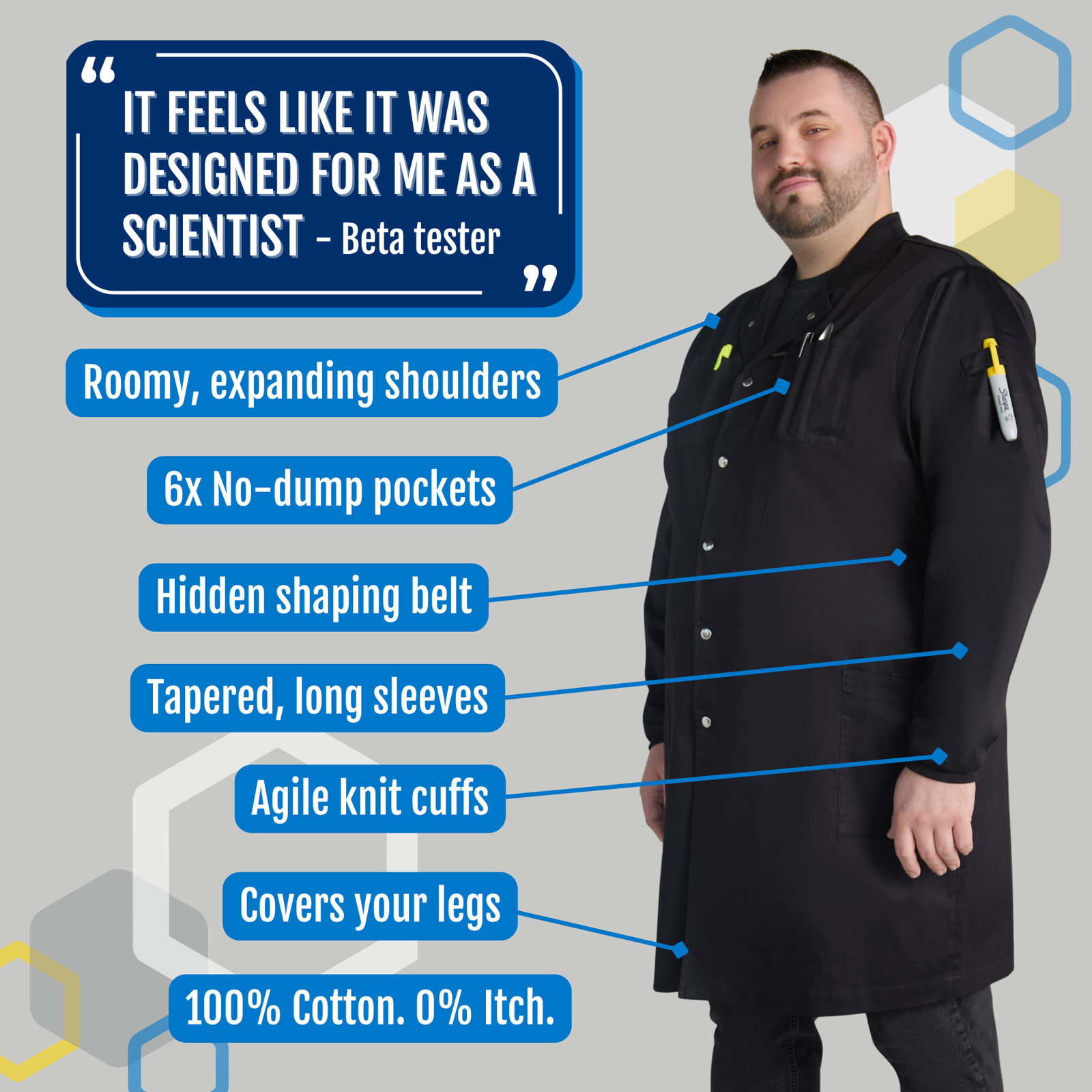
Our lab coats were designed from the feedback of over 1000 scientists as a part of The Lab Coat Project. Designed specifically for scientific research, especially chemistry and microbiology labs, with high-end features at an affordable price. Buying for a group of 10 or more? Request a group order quote here to access our group discounts.











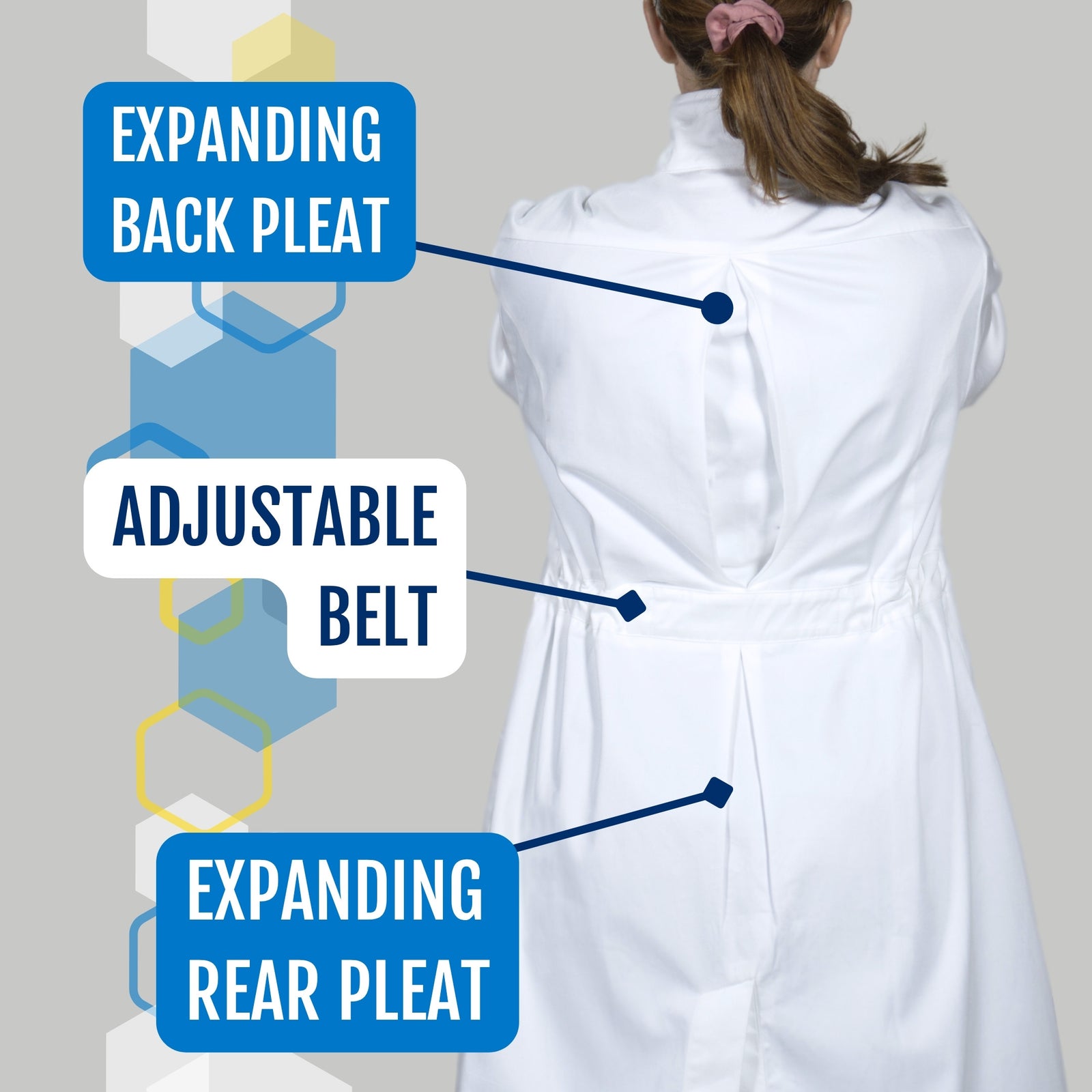




How to Choose the Best Lab Coat for Women
Ninety-seven percent of women in our Lab Coat Project survey reported a fit problem with their lab coat. Not a color complaint, not a style gripe. A fit problem. This guide will show you how to choose the perfect lab coat, so you can focus on science, not adjusting your sleeves.


What Size Lab Coat Should You Get?
Most lab coats fit badly because people order their regular clothing size instead of measuring. Here's exactly how to measure your chest, waist, and hips, what to do if you land between sizes, and why the Louis and Curie fit so differently.
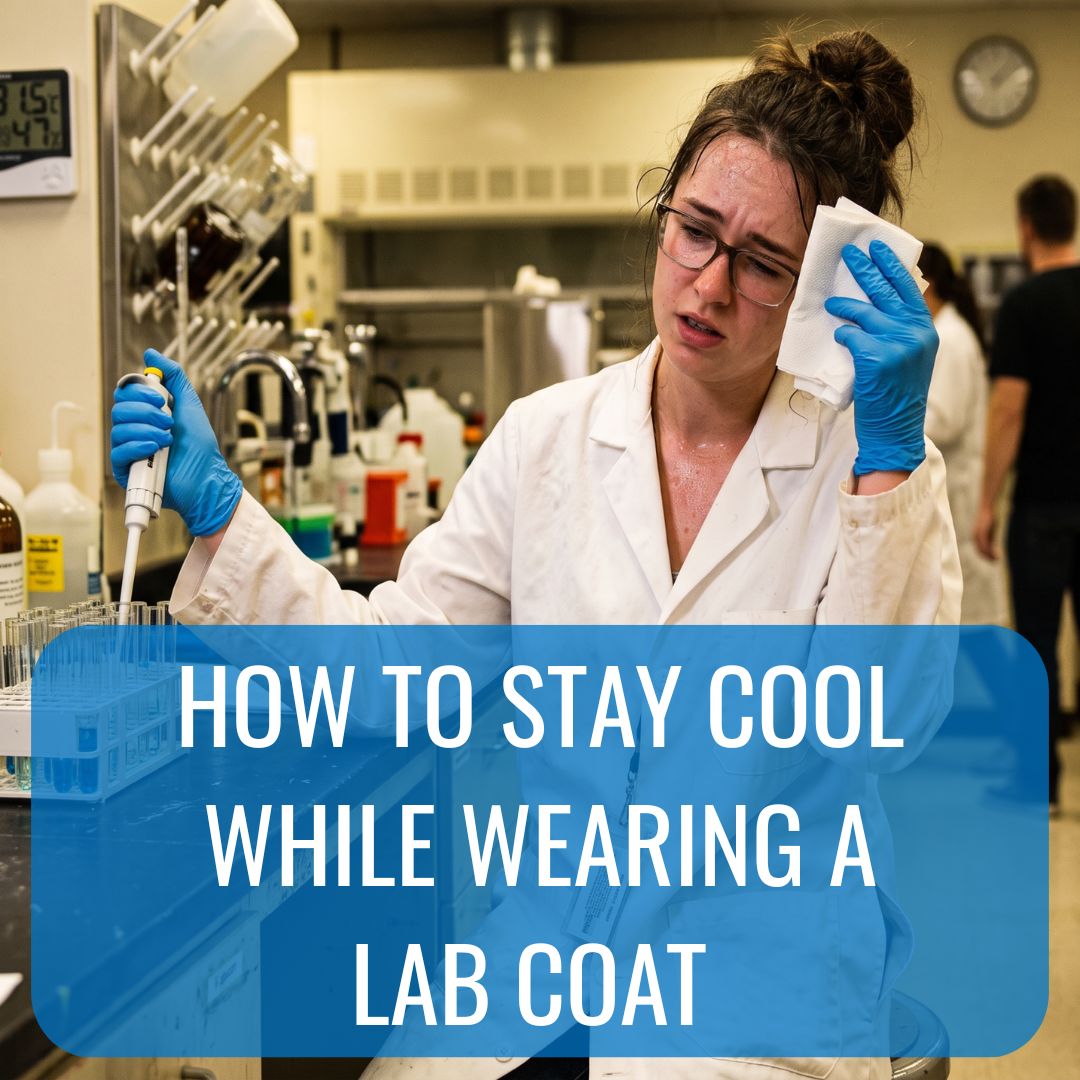

How to Stay Cool While Wearing a Lab Coat All Day
Stay comfortable during long days in the lab with practical, safety-conscious tips to reduce heat and sweat while wearing a lab coat. Learn what to wear, what to avoid, and how to stay cool without compromising protection.