
What Size Lab Coat Should You Get?
Lab coats don’t have to be the boxy, shapeless blobs you see in photos. It just takes a little more care to find a great fit for your unique body.
If you get a generic unisex lab coat like those from Red Kap, Cherokee, or on Amazon, it’s unlikely to fit any part of your body well. It might be too tight in the hips for women and too restrictive in the shoulders for men.
But with gender-specific lab coats like the Louis and Curie lab coats from Genius Lab Gear, anyone can find a great fit. Just don’t guess at your size! One quick measurement will make a huge difference.
One of the most common questions we get is some version of this: "I measured myself but I'm between sizes. What do I do?"
Here's a straight answer.
Start with your actual measurements, not your clothing size
This is the most important thing in this guide, so I'll say it once clearly: do not simply order your regular clothing size OR your normal “unisex” lab coat size.
The Louis and Curie size charts list maximum body measurements per size. All three of your measurements (chest or bust, waist, and hips) need to come in at or below the numbers listed.
Measure yourself wearing the kind of clothing you'd normally wear in the lab. A t-shirt is fine. A thick sweater changes things. Factor that in.
When measuring:
-
Chest (Louis) or bust (Curie): widest point, under your armpits, with a full breath in
-
Waist: 6 to 8 inches below your armpits
-
Hips: widest point, feet shoulder-width apart
Then compare all three measurements to the chart. The size you need is the smallest one where all three fit within the limits.
To make this even easier, we built this interactive size finder page.
If you're between sizes, size up
A lab coat that's slightly too big can be adjusted or intentionally shrunk in the dryer. One that pulls across your shoulders every time you reach for a pipette will bother you until the end of time.
The Louis, Curie, Alma (Maternity), George, and Rosalind lab coat designs have a hidden adjustable belt sewn into the waist that pulls in up to 8 inches of extra fabric. So if the shoulders and chest fit correctly but the coat feels roomy in the middle, the hidden waist cincher handles that. The size chart numbers don't account for this adjustment. It's extra room you have to work with.
Size up if:
-
You wear sweaters or layers underneath not included in your measurement
-
Your measurements land right at the top of a size range but you like it very loose
Otherwise, stay with your measured size.
One more tip: Instead of sizing up during a pregnancy, just get our maternity lab coat (The Alma) in the same size as you wear in the Curie.
The Louis (Men's) and Curie (Women's) fit differently
This matters and it's worth saying directly.
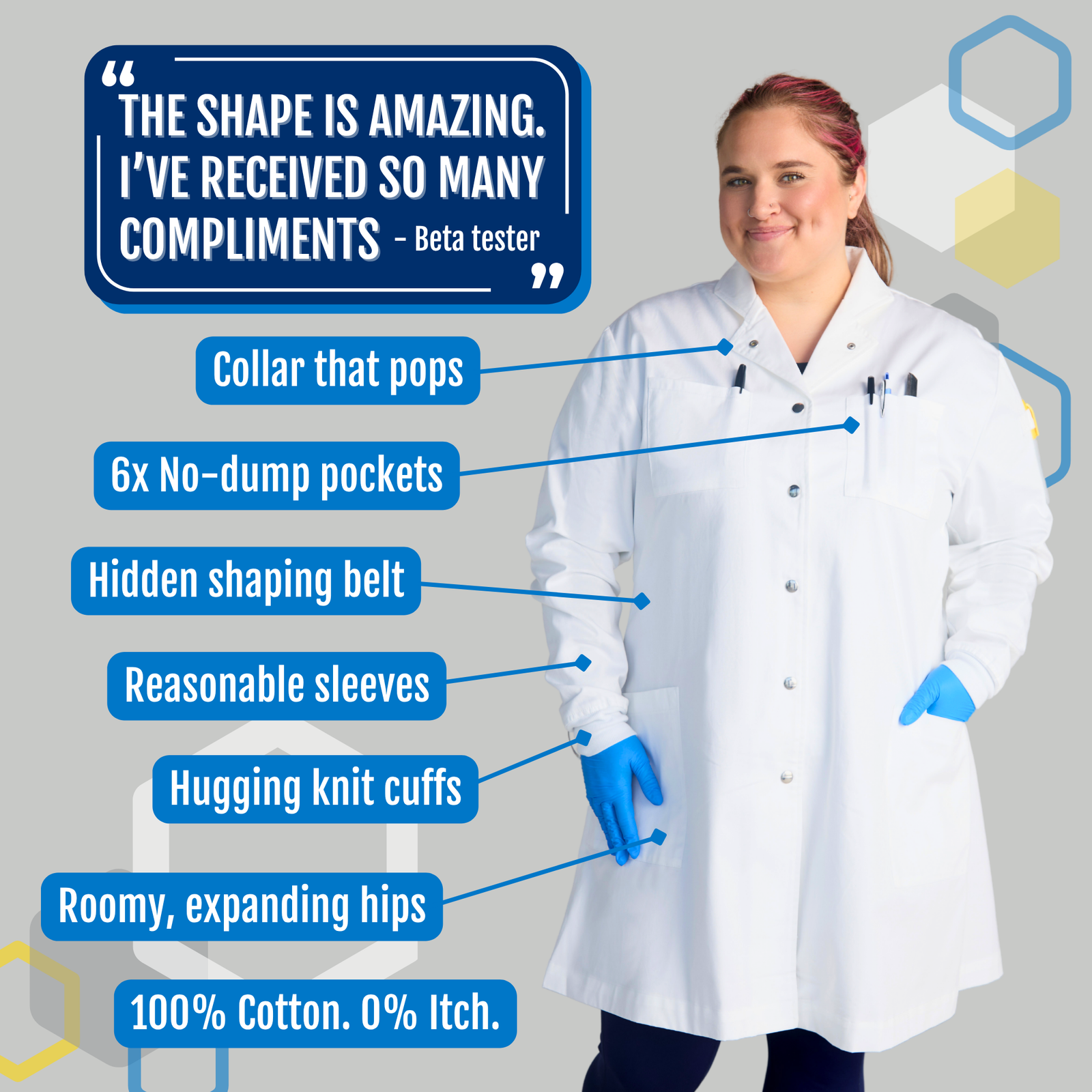
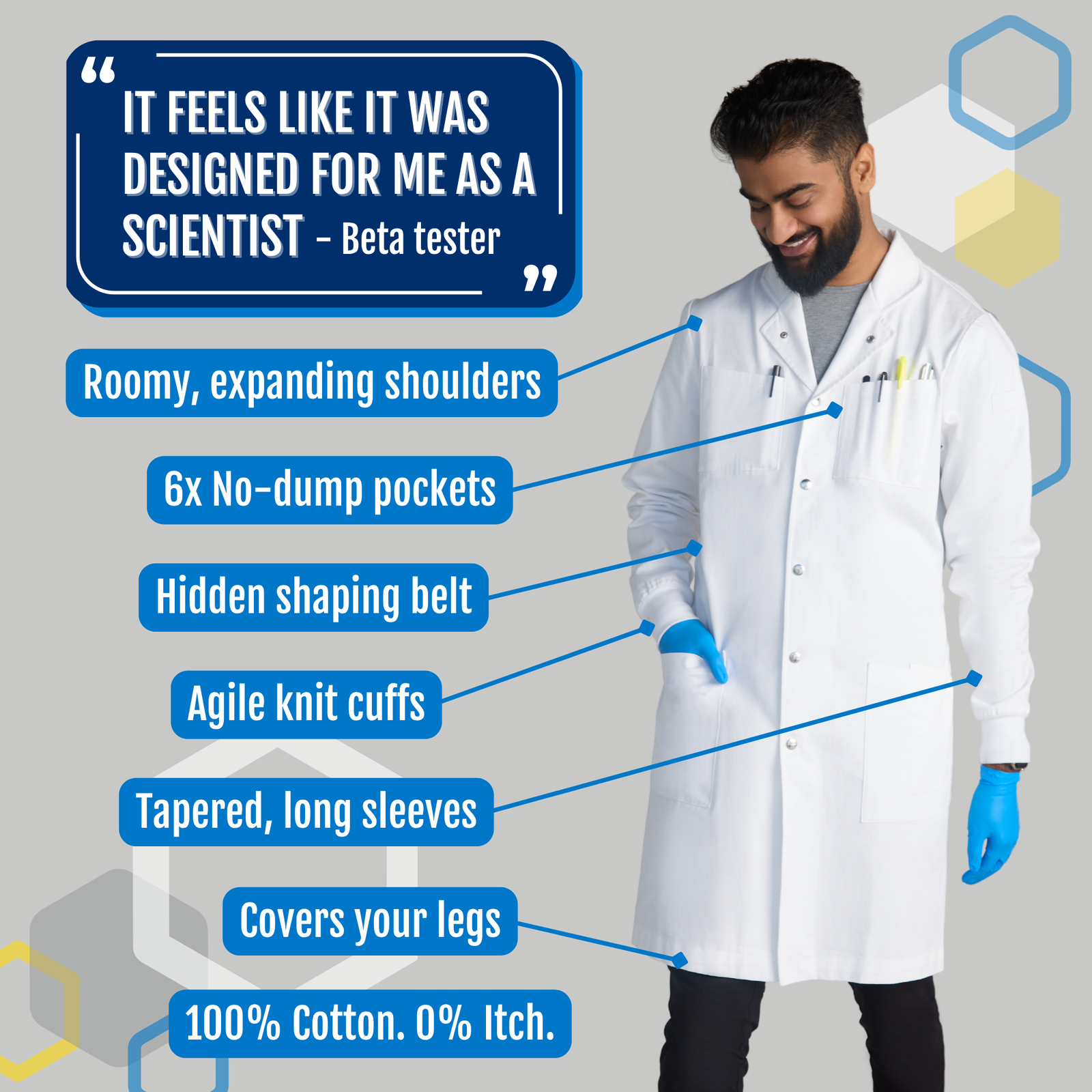
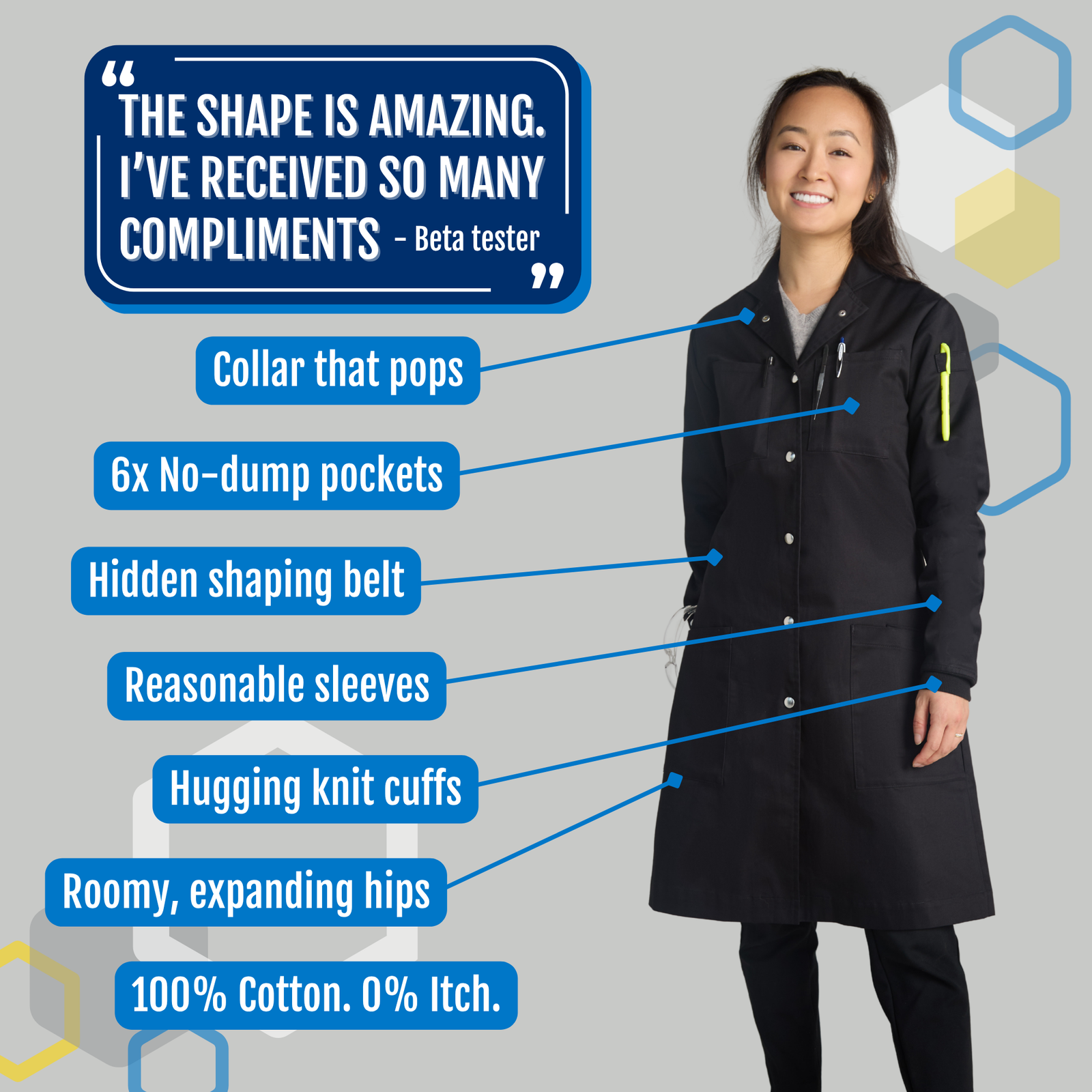
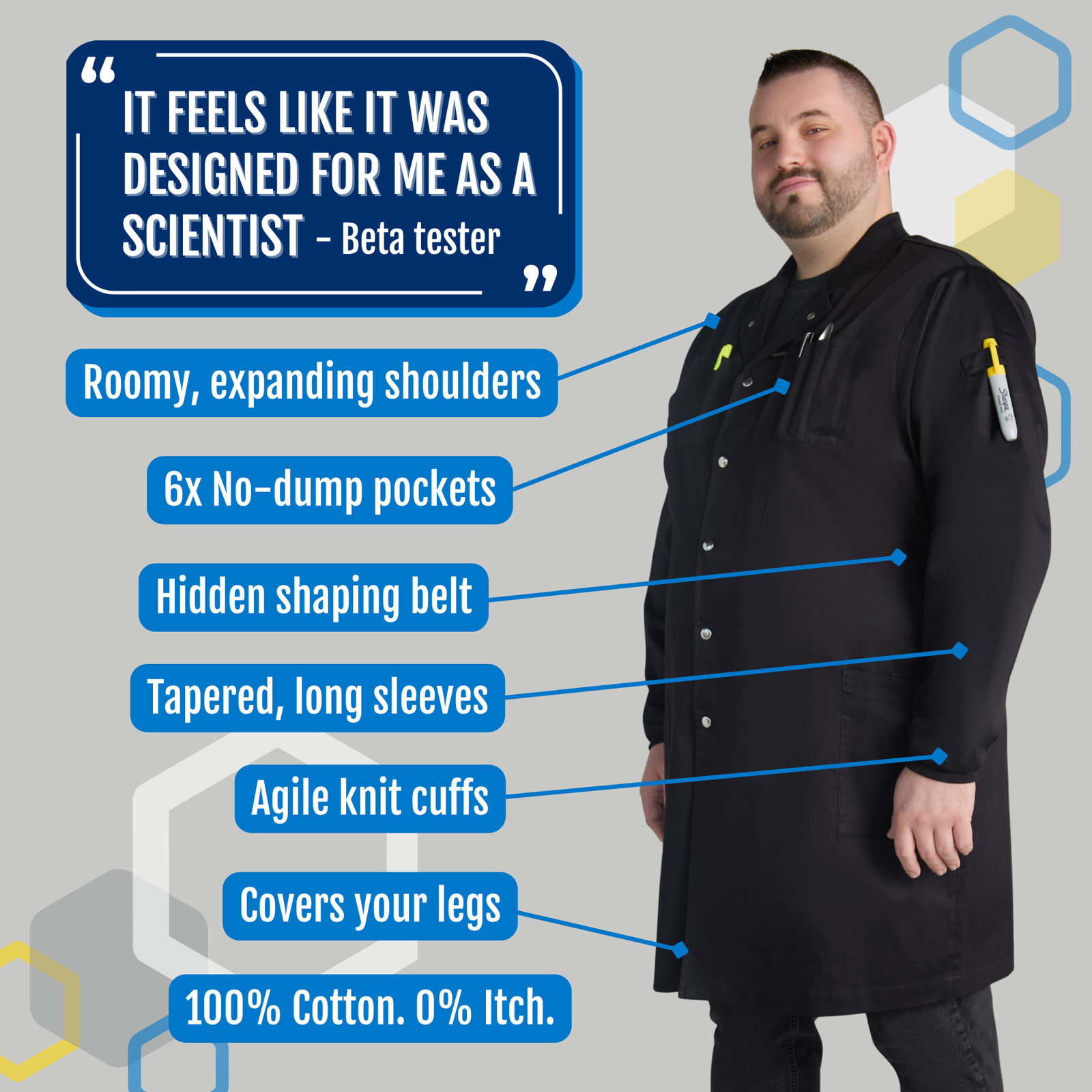
The Louis is cut for a straighter male silhouette with broader shoulders. The Curie is cut with more room through the hips and chest, shaped to fit curves that barrel-shaped unisex lab coats completely ignore.
If you're a woman who has spent years squeezing into men's or unisex coats, the Curie's cut is genuinely different. One of our customers, Emma, put it plainly: she'd been "squeezing herself into a sausage casing" for years. That's the problem the Curie was designed to solve.
👉 How to choose the best lab coat for women
How a lab coat should actually fit
A lab coat is a safety garment first. That changes what "fits well" means.
-
You should be able to reach forward without the sleeves riding up past your wrists.
-
You should be able to bend your elbows without pulling the coat tight across your upper back.
-
You should be able to sit down and reach without popping any buttons open.
-
The collar should close fully when you need it to. On both the Louis and Curie, it pops up to protect your neck and chest from splashes.
Here’s what a bad lab coat fit looks like:
Lab coat too small:
-
The buttons pull or gap when closed.
-
You feel restricted reaching forward.
-
The shoulders feel tight.
-
You avoid buttoning it because it's uncomfortable.
-
The length doesn’t come within a few inches of your knees
Lab coat too large:
-
The shoulder seams extend noticeably past your shoulders.
-
The sleeves cover your hands and interfere with dexterity.
-
Excess fabric catches on equipment or drags across your work surface.
-
Your collar leaves a large part of your chest exposed when you lean forward
One survey respondent described it this way:
"Being swallowed by a giant lab coat makes you feel like you are dressing up in a costume. It creates a strange imposter syndrome that whispers in your ear... 'you're not a real scientist.'"
A slightly roomy coat is the safer call. Extra length and volume are manageable. A coat that limits your range of motion is a daily frustration, and occasionally a real safety concern.
How long should your lab coat be?
Short (waist-length) coats are common in clinical and medical settings where mobility is the priority. These are typically listed in the 30-38 inch range. Knee-length coats are standard in chemistry, biology, and research labs. Both the Louis and Curie are knee-length. Look for 36-44 inches, depending on your height.
Always check your department's requirements. Some intro chemistry labs specify minimum coat lengths. If your lab mandates a particular length, confirm before ordering.
Still not sure?
Use the Lab Coat Size Finder and measure before you order.
If you're still on the fence between two sizes after measuring, reach out. We're happy to help you pick. And if the fit isn't right when it arrives, exchanges are straightforward as long as the coat hasn't been embroidered.
One thing worth knowing: we've heard from hundreds of scientists who said this was the first lab coat that actually fit them. That's not an accident. Every sizing decision in the Louis and Curie came from the same survey data. From scientists telling us exactly what was wrong with the coats they'd been wearing for years.
We took notes!
Lab Coats designed by scientists
Our lab coats were designed from the feedback of over 1000 scientists as a part of The Lab Coat Project. Designed specifically for scientific research, especially chemistry and microbiology labs, with high-end features at an affordable price. Buying for a group of 10 or more? Request a group order quote here to access our group discounts.











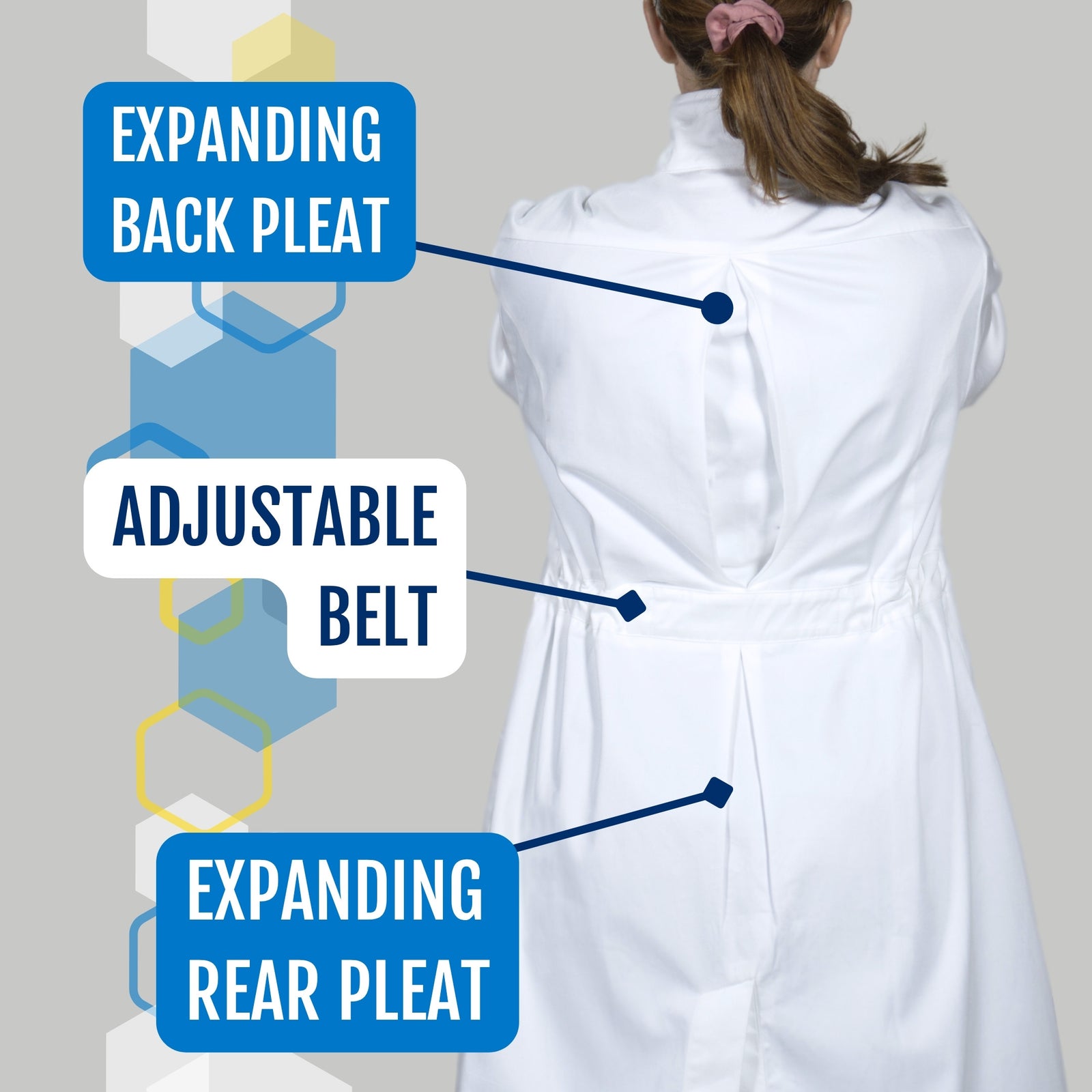


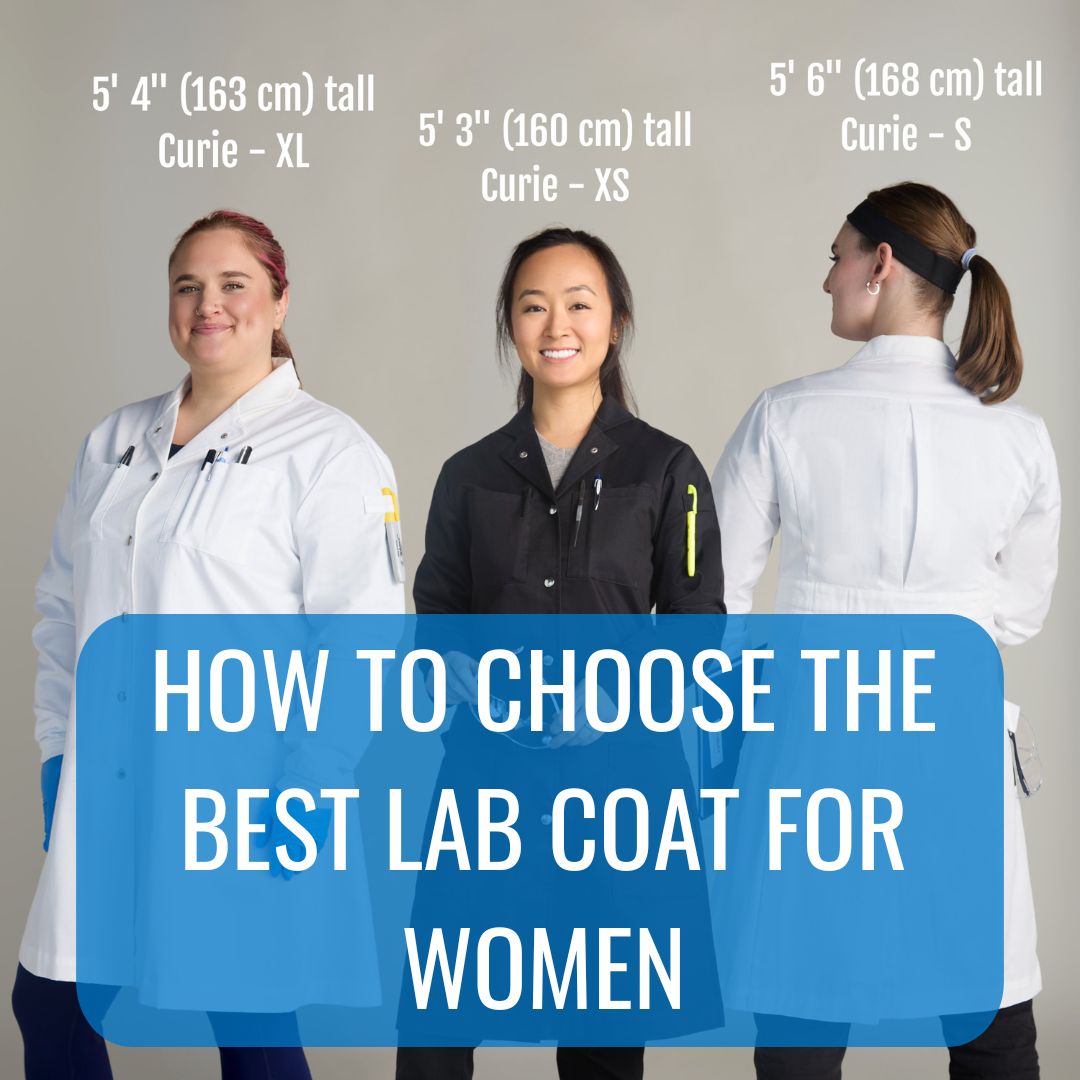

How to Choose the Best Lab Coat for Women
Ninety-seven percent of women in our Lab Coat Project survey reported a fit problem with their lab coat. Not a color complaint, not a style gripe. A fit problem. This guide will show you how to choose the perfect lab coat, so you can focus on science, not adjusting your sleeves.
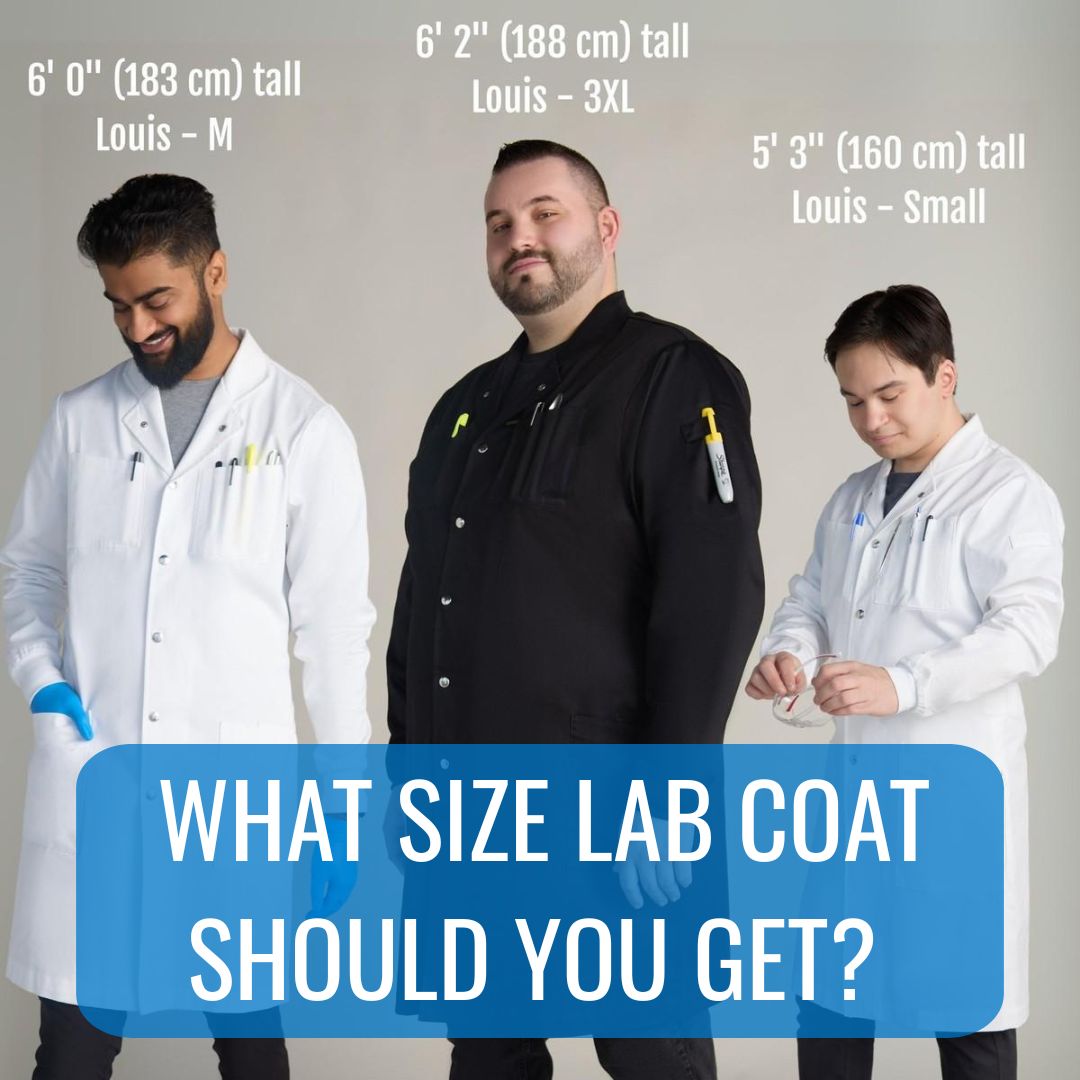

What Size Lab Coat Should You Get?
Most lab coats fit badly because people order their regular clothing size instead of measuring. Here's exactly how to measure your chest, waist, and hips, what to do if you land between sizes, and why the Louis and Curie fit so differently.
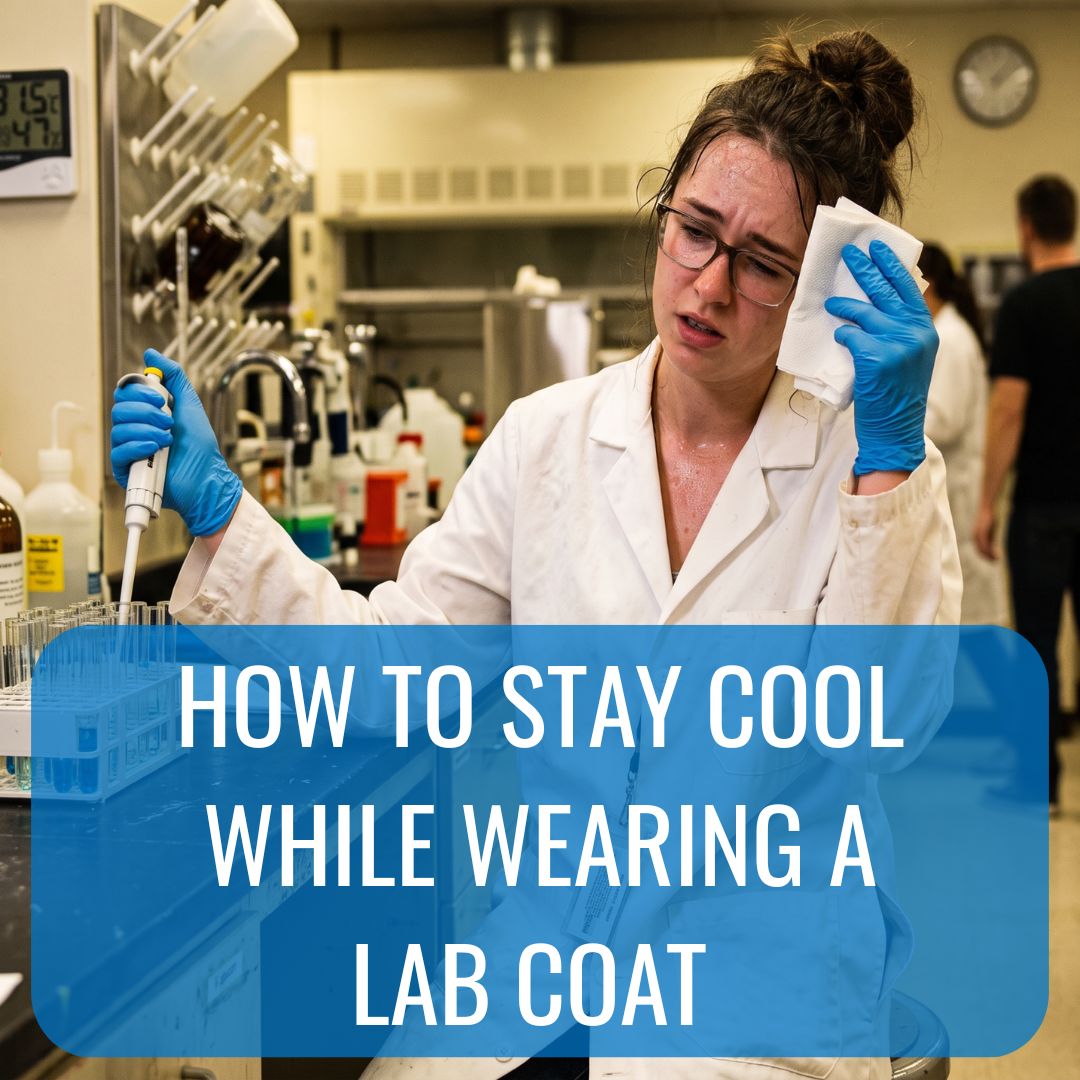

How to Stay Cool While Wearing a Lab Coat All Day
Stay comfortable during long days in the lab with practical, safety-conscious tips to reduce heat and sweat while wearing a lab coat. Learn what to wear, what to avoid, and how to stay cool without compromising protection.