0

Your Cart is Empty

  • Add description, images, menus and links to your mega menu

  • A column with no settings can be used as a spacer

  • Link to your collections, sales and even external links

  • Add up to five columns

  • Antibody (Immunoglobulin G) Plush

    12 items left

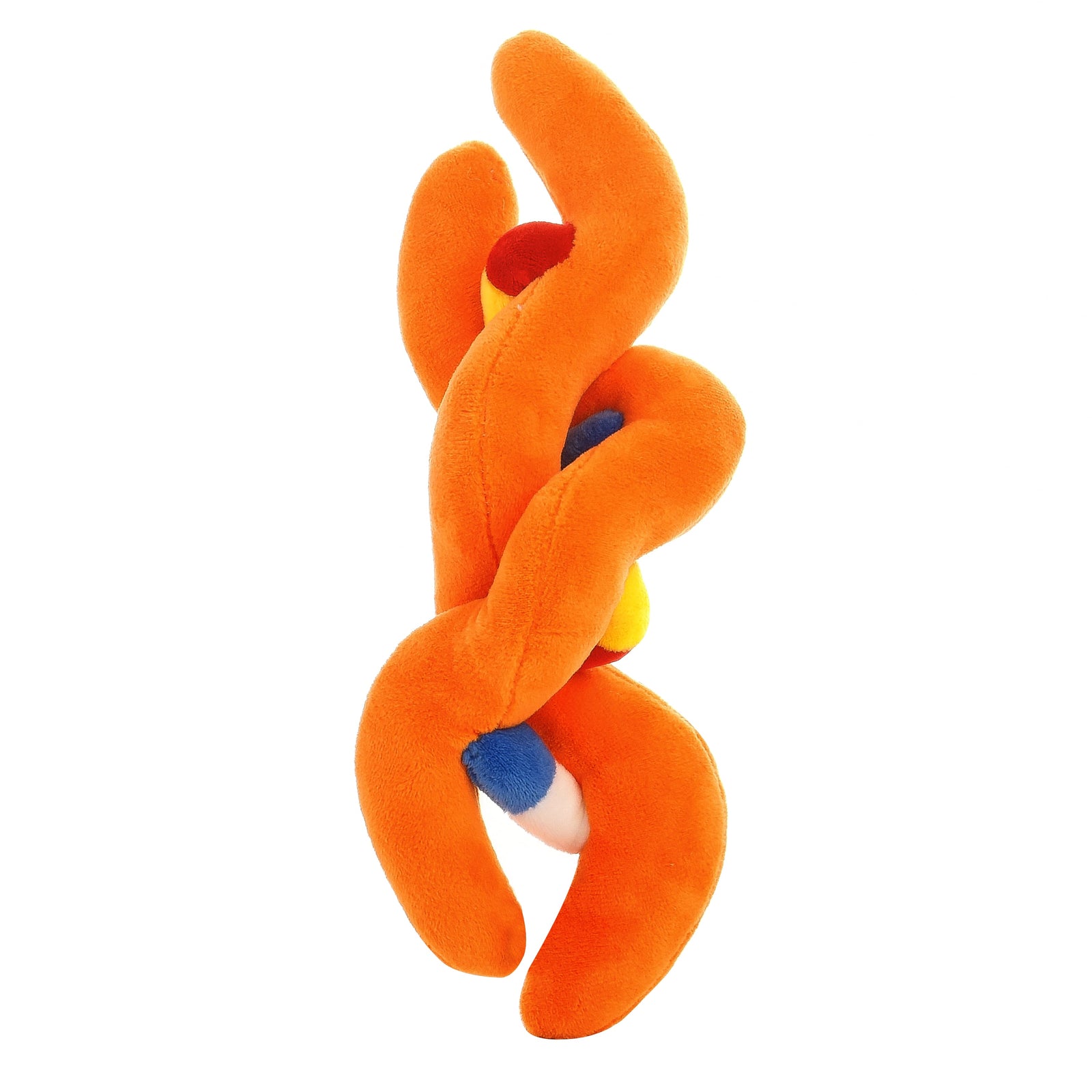
    Your immune system's best defense, now in plush form. GIANTmicrobes' Antibody (Immunoglobulin G) Plush is modeled after the Y-shaped IgG antibody, the workhorse of the human immune response. Soft, cuddly, and surprisingly faithful to the real molecular structure.

    Includes an educational card with facts about how antibodies work. A clever, memorable gift for immunologists, microbiologists, biochemists, and biology students.

    Materials & Care

    Plush from all new materials. Stuffed with polyester fiber fill. Surface washable: sponge with water & soap, air dry.

    Packaging

    Each plush microbe includes a printed card with fun, educational and fascinating facts about the actual microbe or cell.

    Safety Standards

    Every product meets or exceeds U.S. and European standards for safety. For ages 3 and up.

    All About Antibody (Immunoglobulin G)

    FACTS:

    Antibodies are Y-shaped proteins produced by the body's immune system to help identify foreign interlopers such as viruses, bacteria, or toxic chemicals. Secreted by specialized B-cells, they function by grabbing onto suspicious antigens using the tips of their arms, and holding fast until other immune system cells have a chance to neutralize the threat.

    While the bodies of antibodies come in a few specific types (or isotypes), the tips (or paratopes) can be custom made, like a lock to a key, to attach only to specific parts (or epitopes) of an antigen. There are more than 10 billion combinations to this lock, so it can identify a lot of alien intruders! (Sometimes a single antigen has a number of epitopes, which means it gets tackled by a swat team of antibodies, giving it little chance of escape.)

    Although antibodies try to identify only foreign substances, sometimes they make mistakes and falsely accuse normal parts of the body of trespassing. In these instances, autoimmune diseases can result, as the body becomes a police state and unleashes its immune system on itself.

    But normally, antibodies exercise good judgment. In addition, vaccines can help prepare antibodies for threats they've never encountered. By providing a sneak peek at epitopes found on genuine threats, vaccines train antibodies to respond quickly if they ever encounter the same threat again, allowing the body to neutralize it before it has a chance to fully develop.

    More Nerdy Details

    An antibody, or immunoglobulin, is a Y shaped protein that is used to identify and protect your body from harmful substances. There are amino acid chains on the ends of the Y that attach like puzzle pieces to a specific harmful substance, called an antigen. Humans can produce different antibodies by varying the amino acid chains.

    Once the antibody attaches to the threat, it is able to protect the body in a couple different ways. The first is to coat the antigen in order to prevent it from hurting the healthy body cells. Another way is to tell the rest of the immune system to attack the threat. The antibody is the perfect gift for a biology teacher!

    Where did the name come from?

    Alpha, Gamma, etc. were used to distinguish the different immunoglobulin categories as part of an arbitrary scientific naming process. In 1964, the World Health Organization defined a system for naming each of the isotopes: IgA, IgG, etc.

    Types:

    IgA (10%-15%): found in mucosal places of the body such as the respiratory, digestive, and reproductive tracts, as well as in tears, saliva, and breast milk. They protect the body from antigens that come from the outside.

    IgG (75%-80%): found in all bodily fluids. These antibodies fight bacterial and viral infections.

    IgM (5%-10%): found in blood and lymph fluid and are the first antibodies made in response to an infection. They help the immune system to destroy the antigen by creating a bridge for other proteins to attach to the antigen and attack it.

    IgE: found in mucous membranes, lungs, and skin. They are responsible for allergic reactions.

    IgD: found in small amounts in belly and chest tissue. They activate the B-cells that they are attached to.

    Actual Size of the real thing

    10 nm, meaning it would take 100,000 antibodies to stretch across a Skittles candy.

    Biological System

    Immune system

    How many are there?

    A healthy human can produce up to about 10^12 different antibodies.

    Where It Lives

    Circulating in blood plasma and lymph, and present in mucosal surfaces (gut, lungs, tears, saliva, breast milk) and most body tissues.

    Historical Notes

    Discovery and Research:

    1890: Emil von Behring and Kitasato Shibasaburo recognized a substance in the blood that could neutralize and counter infections. They took serum from animals immunized against diphtheria and transferred it to animals who were suffering from it. This cured the infected animals and earned Behring the Nobel Prize in 1901.

    1920: Michael Heidelberger and Oswald Avery showed that antibodies were proteins, and antibodies could precipitate antigens.

    1948: Astrid Fagraeus showed that plasma B cells are involved in antibody production.

    Fascinating Facts

    Antibodies in Babies: IgG are the only antibodies that can cross the placenta in a pregnant woman in order to protect the fetus.

    Antibody: a 2002 science fiction thriller.

    Antibodies: a 2005 German crime-drama-thriller.

    Carbon-neutral shipping on all orders
    12281kg
    shipping emissions removed
    That's like...
    31438
    miles driven by an average gasoline-powered car
    We fund innovations in...
    Direct Air Capture
    Bio Oil
    Mineralization