0

Your Cart is Empty

  • Add description, images, menus and links to your mega menu

  • A column with no settings can be used as a spacer

  • Link to your collections, sales and even external links

  • Add up to five columns

  • Mitochondria Plush

    10 items left

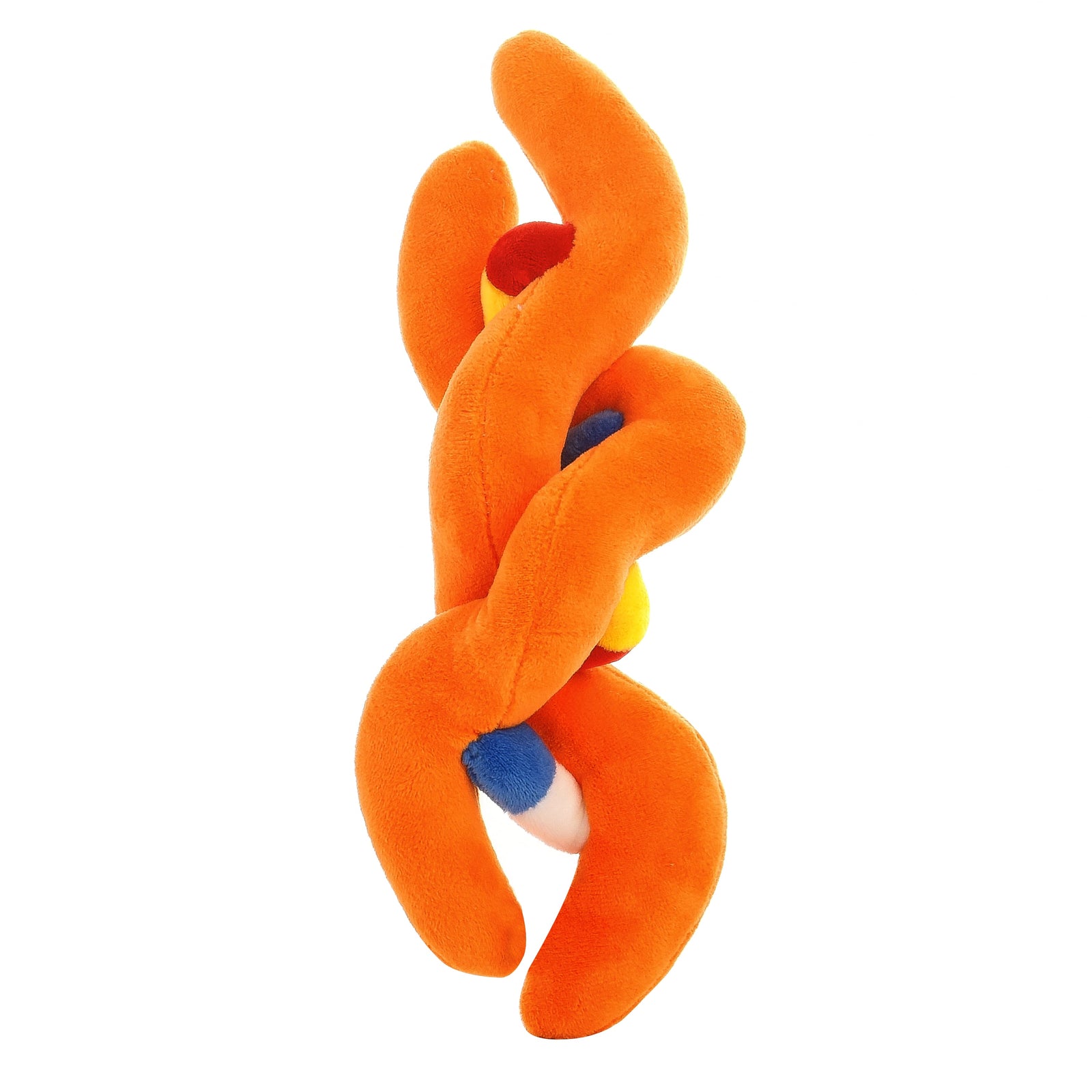
    The powerhouse of the cell, now in plush form. GIANTmicrobes' Mitochondria Plush is a faithful, huggable recreation of the organelle responsible for producing the energy that keeps every living cell running. An instant hit with anyone who survived AP Biology.

    Includes an educational card with facts about cellular respiration and mitochondrial function. A perfect gift for biologists, biochemists, genetics researchers, science teachers, and anyone with a healthy appreciation for the cell.

    Materials & Care

    Plush from all new materials. Stuffed with polyester fiber fill. Surface washable: sponge with water & soap, air dry.

    Packaging

    Each plush microbe includes a printed card with fun, educational and fascinating facts about the actual microbe or cell.

    Safety Standards

    Every product meets or exceeds U.S. and European standards for safety. For ages 3 and up.

    All About Mitochondria

    FACTS:

    Mitochondria, the powerhouse of the cell, combine oxygen with food to generate energy for cells to move, divide and live. These organelles power the cells in animals, plants, fungi and other eukaryotic lifeforms. Mitochondria can be spherical, ovoid, branching, and even shape-changing! Some cells have only one mitochondria, but most have many. Cells with a lot of metabolic activity, such as liver cells, can have thousands.

    Mitochondria have smooth outer membranes and folded inner membranes with tubular projections called cristae. They are filled with water and protein. Mitochondria also contain DNA and ribosomes packed with RNA. Mitochondrial DNA, or mtDNA, accounts for a tiny portion of our body's total DNA, but it is notably distinct from DNA in the nucleus. Unlike nuclear DNA, which comes from both parents, mitochondrial DNA is passed to you from your mother only. Since this unique part of your genome comes from her egg cell, it can be used to establish maternal family ties.

    Mitochondria are wonderful, yet most organisms do not have any at all. Living things are divided into eukaryotes and prokaryotes, with the exception of viruses. Eukaryotes, animals, plants, fungi and protists, have cells with mitochondria as well as nuclei with DNA. Prokaryotes, bacteria and archaea, are single-celled microbes without mitochondria nor other organelles aside from ribosomes. When life began 3.5 billion years ago, prokaryotes ruled our planet. After another 1.5 billion years or so, life got complicated and diverse.

    One remarkable theory, called endosymbiosis, holds that the first eukaryotes engulfed smaller, free-living prokaryotic cells, which then became mitochondria and other organelles inside of more complex cells. These microbes established a mutually beneficial relationship and headed down the evolutionary path to become amoebas, waterbears, lizards, birds and human beings. So thanks mitochondria, thank you for the power to make us who we are today!

    More Nerdy Details

    Mitochondria are the energy-producing organelles of eukaryotic cells. They combine oxygen with nutrients from food to generate ATP, the chemical fuel that powers nearly every activity in the body. Each mitochondrion has a smooth outer membrane and a folded inner membrane (with projections called cristae) that dramatically increases the surface area available for energy production. They also carry their own DNA (mtDNA), which is inherited exclusively from the mother.

    Where did the name come from?

    The name "mitochondrion" comes from the Greek mitos ("thread") and chondrion ("granule"), referring to the thread-like and granular appearance of these organelles under early microscopes. The term was coined by German microbiologist Carl Benda in 1898.

    Actual Size of the real thing

    Mitochondria typically range from 0.5 to 1 micrometer in diameter, with lengths from about 1 to 10 micrometers. A single human cell can contain anywhere from one mitochondrion to several thousand, depending on the cell's energy demands.

    Biological System

    Cellular energy / metabolism (organelle inside eukaryotic cells)

    How many are there?

    From one to several thousand per cell; estimated >10 quadrillion (10^16) total in the human body.

    Where It Lives

    Mitochondria live inside the cells of every eukaryotic organism: animals, plants, fungi, and protists. They are especially abundant in high-energy tissues like muscle, liver, heart, and brain. Prokaryotes (bacteria and archaea) do not have mitochondria.

    Historical Notes

    Mitochondria were first observed in the mid-1800s and given their modern name by Carl Benda in 1898. In the 1960s, Lynn Margulis championed the endosymbiotic theory, which proposes that mitochondria descended from free-living prokaryotic cells engulfed by early eukaryotes about 1.5 to 2 billion years ago. This theory is now widely accepted and is supported by mitochondria's own DNA, ribosomes, and double-membrane structure.

    Fascinating Facts

    Mitochondrial DNA is inherited only from your mother, which makes it a powerful tool for tracing maternal ancestry and reconstructing human migration patterns.

    All living humans share a common maternal ancestor through mtDNA, sometimes called "Mitochondrial Eve," who lived in Africa roughly 150,000 to 200,000 years ago.

    Because mitochondria likely began as independent bacteria, they still divide on their own inside our cells, on a schedule separate from the cell itself.

    Carbon-neutral shipping on all orders
    12281kg
    shipping emissions removed
    That's like...
    31438
    miles driven by an average gasoline-powered car
    We fund innovations in...
    Direct Air Capture
    Bio Oil
    Mineralization