0

Your Cart is Empty

  • Add description, images, menus and links to your mega menu

  • A column with no settings can be used as a spacer

  • Link to your collections, sales and even external links

  • Add up to five columns

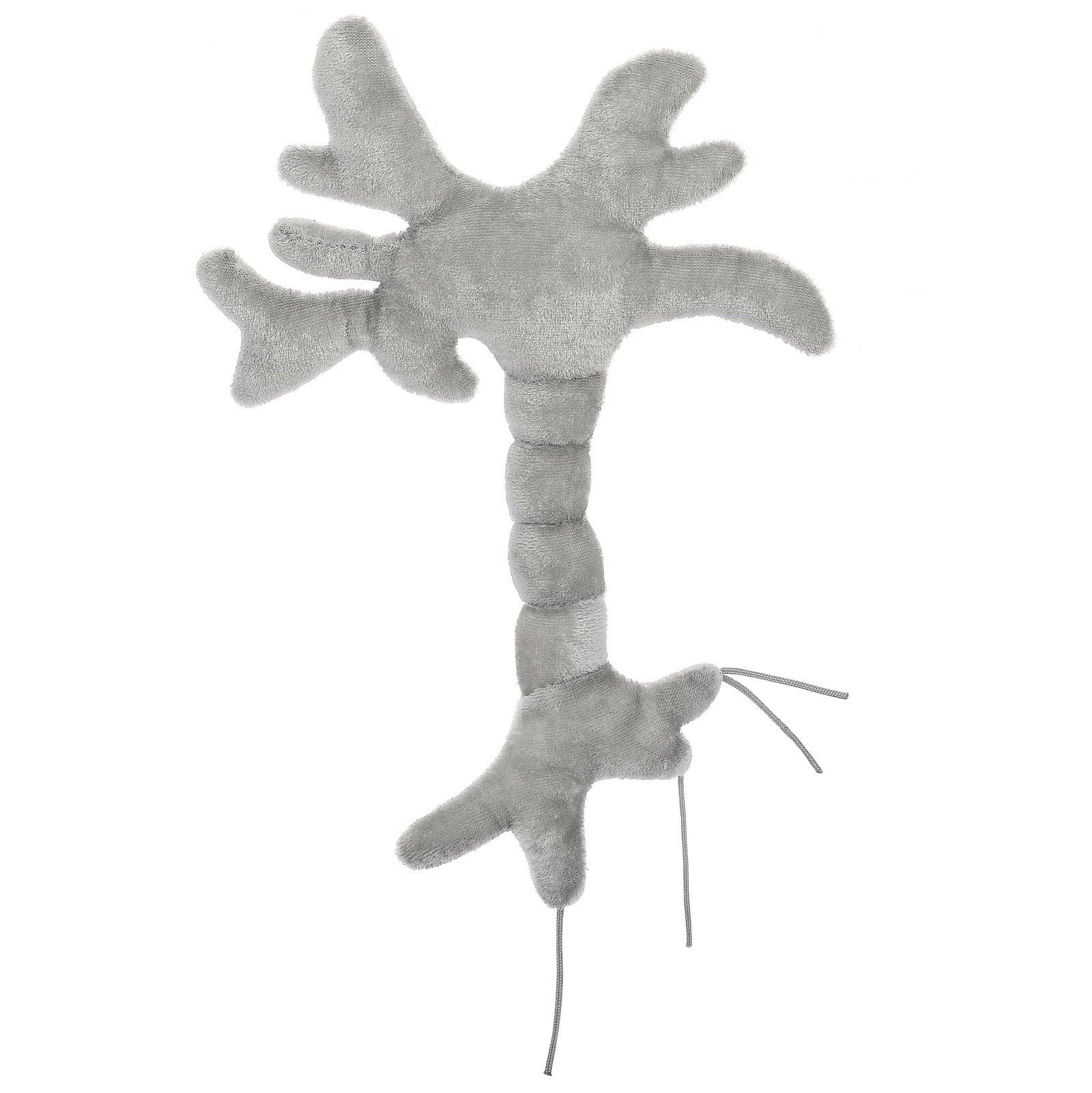
  • Brain Cell (Neuron) Plush

    11 items left

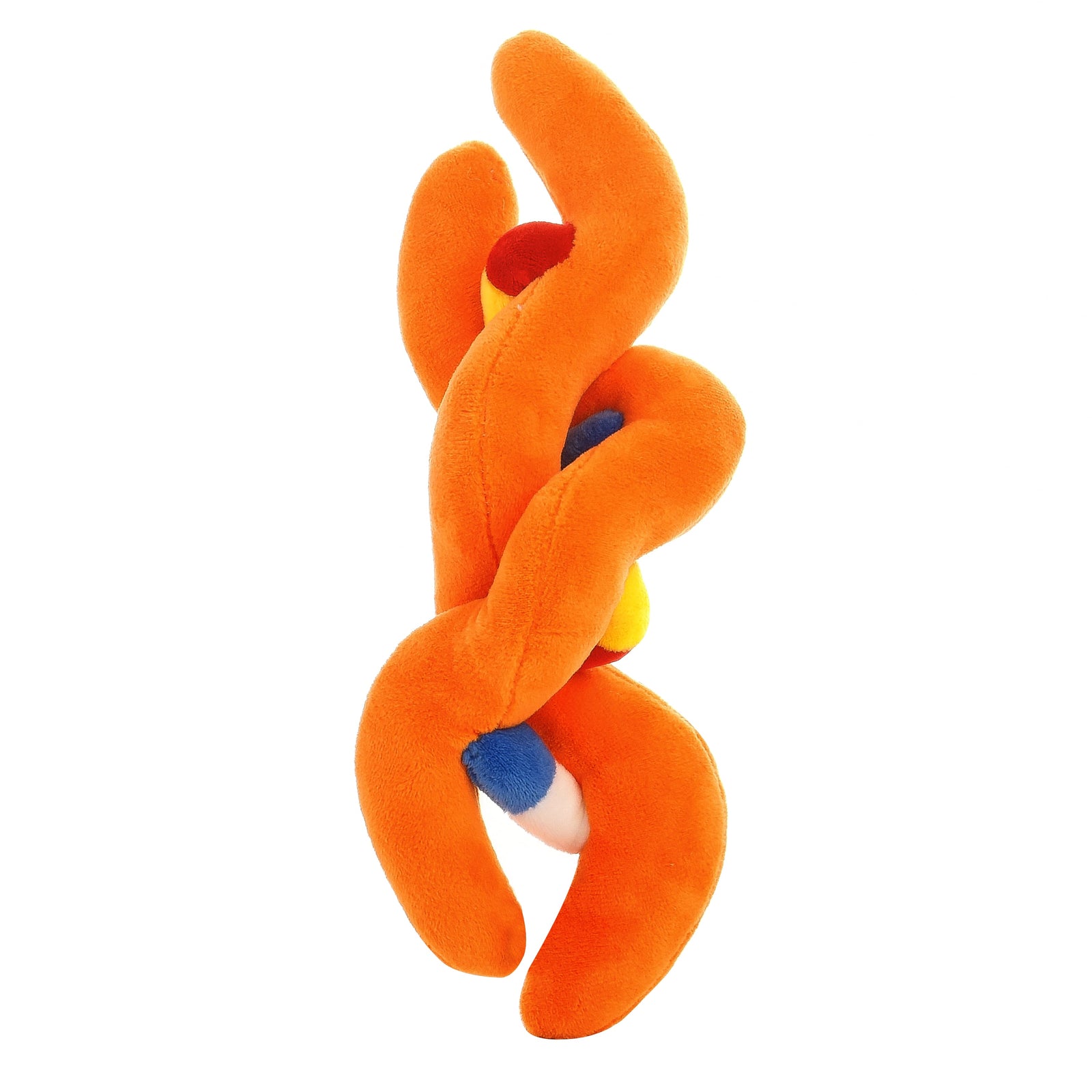
    Meet the cell that controls it all. GIANTmicrobes' Brain Cell (Neuron) Plush is an adorable, anatomically inspired plush modeled after the neurons that power every thought, memory, and movement. Complete with dendrites, axon, and a myelin sheath, it is a surprisingly accurate (and huggable) tribute to one of the most important cells in the body.

    Includes an educational card with fascinating facts about the brain cell. A memorable gift for neuroscientists, students, educators, and anyone who loves science.

    Materials & Care

    Plush from all new materials. Stuffed with polyester fiber fill. Surface washable: sponge with water & soap, air dry.

    Packaging

    Each plush microbe includes a printed card with fun, educational and fascinating facts about the actual microbe or cell.

    Safety Standards

    Every product meets or exceeds U.S. and European standards for safety. For ages 3 and up.

    All About Brain Cell (Neuron)

    FACTS:

    The little grey cells that make up your mind are primarily neurons. You have approximately 100 billion of them in your head!

    The typical neuron is connected to thousands of others forming an inconceivably dense signal-processing network. With over a 1,000 trillion connections, or synapses, in your brain, there are more transmission-pathways in your head than there are atoms in the universe. But before you let that go to your head, think about this: the number of synapses peaks in early childhood, so the average three-year-old has ten times as many as the average adult!

    Of course, a linear relationship between synaptic-density and cognitive ability has never been scientifically demonstrated. (If you need help with that sentence, ask a toddler).

    But measuring brain-power doesn't have to be tricky: research shows that there is enough electrical power flickering in your neurons to illuminate a flashlight bulb.

    Or build one. It just depends how you think about it.

    All a single neuron can do is flash a small signal on to its neighbors, and only when enough incoming synapses are active. But together, they bestow upon us action like an angel, and apprehension like a god.

    Or do our thoughts animate them? Cogito ergo sum.

    More Nerdy Details

    Brain cells, or neurons, are the building blocks of the nervous system. They are designed to receive and transmit information. The cell body has branching dendrites coming off of it in order to receive signals from other neurons.

    Types:

    Sensory Neurons: bring information from the 5 senses into the central nervous system.

    Motor Neurons: send information from the central nervous system to muscles and glands.

    Interneurons: send messages within the central nervous system. This type makes up the majority of neurons.

    Where did the name come from?

    German scientist Heinrich Wilhelm Gottfried von Waldeyer-Hartz gave this cell the name "neuron" in 1891.

    Actual Size of the real thing

    Diameter varies from 0.004mm, where you could fit 30,000 neurons onto the head of a pin, to 0.1mm, the thickness of a sheet of paper. The length can range from less than an inch to many feet.

    Biological System

    Nervous system (central and peripheral)

    How many are there?

    About 86 billion neurons in the human brain (long cited as ~100 billion)

    Where It Lives

    Throughout the brain, spinal cord, and peripheral nerves, with the highest density in the cerebral cortex and cerebellum.

    Historical Notes

    1838: Mathias Jakob Schleiden and Theodor Schwann proposed the theory that the nervous system should theoretically be composed of cells like all other organic tissue.

    1906: The Nobel Prize in Medicine and Physiology was awarded to Santiago Ramon y Cajal and Camillo Golgi. Cajal improved the techniques of Golgi, which involved staining neurons for observation.

    Fascinating Facts

    Neurons can't regrow after damage, but new connections between neurons form throughout life.

    Neurons in Culture:

    The Theory of Everything: Stephen Hawking struggles with ALS, a motor neuron disease.

    Neurons to Nirvana: A 2013 documentary about psychedelic drug research.

    Neuron Music: A K-POP band.

    Carbon-neutral shipping on all orders
    12281kg
    shipping emissions removed
    That's like...
    31438
    miles driven by an average gasoline-powered car
    We fund innovations in...
    Direct Air Capture
    Bio Oil
    Mineralization