0

Your Cart is Empty

  • Add description, images, menus and links to your mega menu

  • A column with no settings can be used as a spacer

  • Link to your collections, sales and even external links

  • Add up to five columns

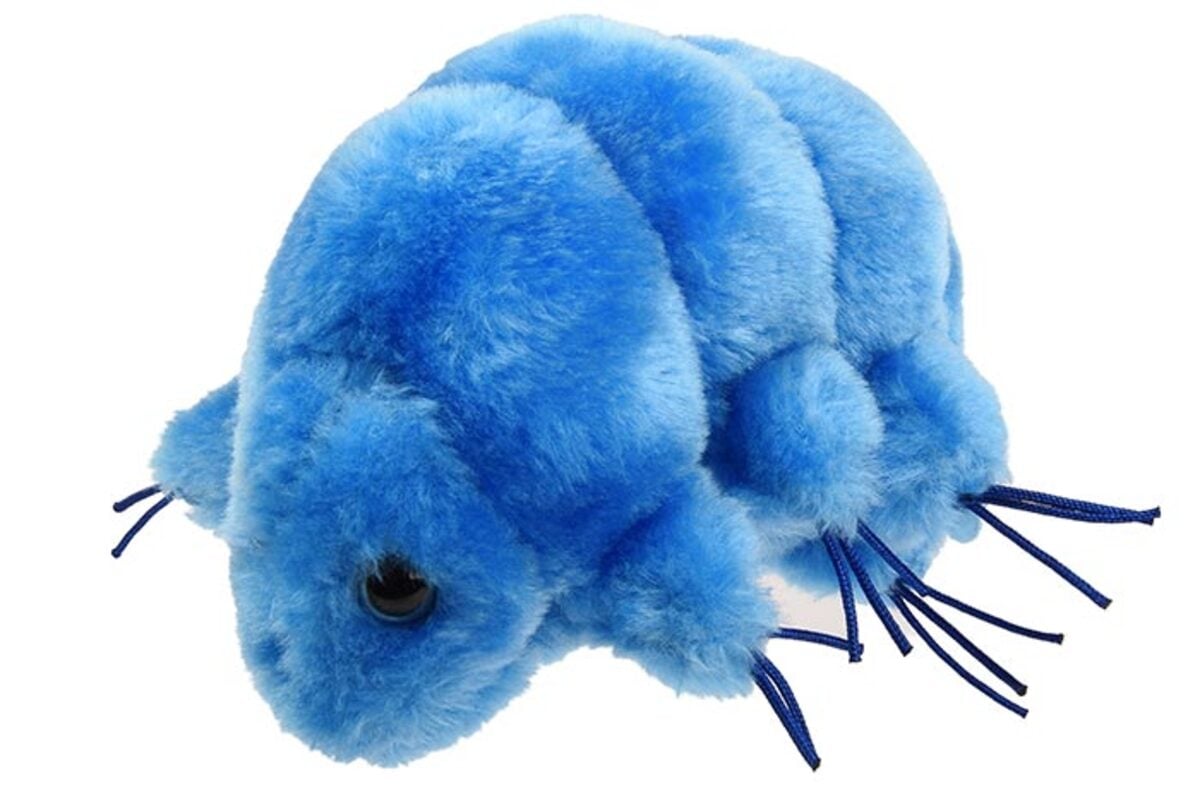
  • Water Bear (Tardigrade) Plush

    8 items left

    The toughest creature in the known universe, now in plush form. GIANTmicrobes' Water Bear (Tardigrade) Plush celebrates the microscopic animal famous for surviving radiation, the vacuum of outer space, and temperatures that would destroy almost any other life form.

    Includes an educational card packed with facts about tardigrades and their legendary resilience. A uniquely fascinating gift for biologists, astrophysicists, marine biologists, ecologists, and science lovers of all kinds.

    Materials & Care

    Plush from all new materials. Stuffed with polyester fiber fill. Surface washable: sponge with water & soap, air dry.

    Packaging

    Each plush microbe includes a printed card with fun, educational and fascinating facts about the actual microbe or cell.

    Safety Standards

    Every product meets or exceeds U.S. and European standards for safety. For ages 3 and up.

    All About Water Bear (Tardigrade)

    FACTS:

    One of the more fascinating organisms in the microsphere is the common tardigrade, technically speaking, "slow walker." However, it is not the tardigrade's sluggish speed that captures the attention, but rather the fact that as this miniscule creature lumbers along on its eight tiny legs, it bears an uncanny resemblance to, well, a bear.

    First described in 1773 by Johann August Ephraim Goeze as "kleiner Wasserbär," these "little Waterbears" are unusually hardy. By entering a state of cryptobiosis, a kind of super-hibernation where the metabolism becomes inactive, waterbears can survive in boiling water, and at temperatures very close to absolute zero. They can dry out and survive 99% dehydrated for decades. They can survive a thousand times more radiation than humans can. They can even survive in the vacuum of outer space!

    Needless to say, with these death-defying abilities, waterbears are found all over the world, from the highest mountain peaks to the depths of the deep. But they are typically found nearby in the miniature rainforests created by common mosses (indeed, they are sometimes called "moss piglets"), so backyard adventurers with low-powered microscopes can easily go on a waterbear hunt.

    But never fear: although a few species (such as the grizzly Milnesium tardigradum) are aggressively carnivorous, as a whole, waterbears (including our own Hypsibius dujardini) are quiet herbivores who live gentle little lives, picnicking and playing, and taking long, slow walks.

    More Nerdy Details

    Tardigrades can morph in extreme conditions to survive without water. In dry conditions, they replace the water in their bodies with a sugar called trehalose.

    Where did the name come from?

    The scientific name, Tardigrade, comes from Latin roots to describe its slow movement. They're known as water bears because they prefer wet conditions and look like tiny, microscopic bears.

    Actual Size of the real thing

    Most tardigrades are 0.1 to 1.5 millimeters long as adults, smaller than a grain of sand and only visible under a microscope.

    Biological System

    Complete organism (Phylum Tardigrada)

    How many are there?

    More than 1,300 named species; found in nearly every habitat on Earth in incalculable numbers.

    Where It Lives

    Tardigrades, or water bears, are tiny creatures that you can easily find frolicking in Central Park, but they can live just about anywhere from deep ocean trenches to Himalayan mountaintops. They can survive extreme conditions from the hot temperatures of hot springs to Antarctic ice! They've been around for over 500 million years!

    Historical Notes

    They were discovered in 1773 by a German pastor named Johann Goeze. Their superpowers were recognized only three years later by an Italian scientist named Lazzaro Spallanzani.

    Fascinating Facts

    In 2007, Swedish researchers tested the tardigrades' resilience by launching them into space. Most survived the exposure to cosmic rays and space conditions. Some even survived deadly levels of UV radiation! All this time, we thought only Superman could do that!

    Carbon-neutral shipping on all orders
    12281kg
    shipping emissions removed
    That's like...
    31438
    miles driven by an average gasoline-powered car
    We fund innovations in...
    Direct Air Capture
    Bio Oil
    Mineralization