0

Your Cart is Empty

  • Add description, images, menus and links to your mega menu

  • A column with no settings can be used as a spacer

  • Link to your collections, sales and even external links

  • Add up to five columns

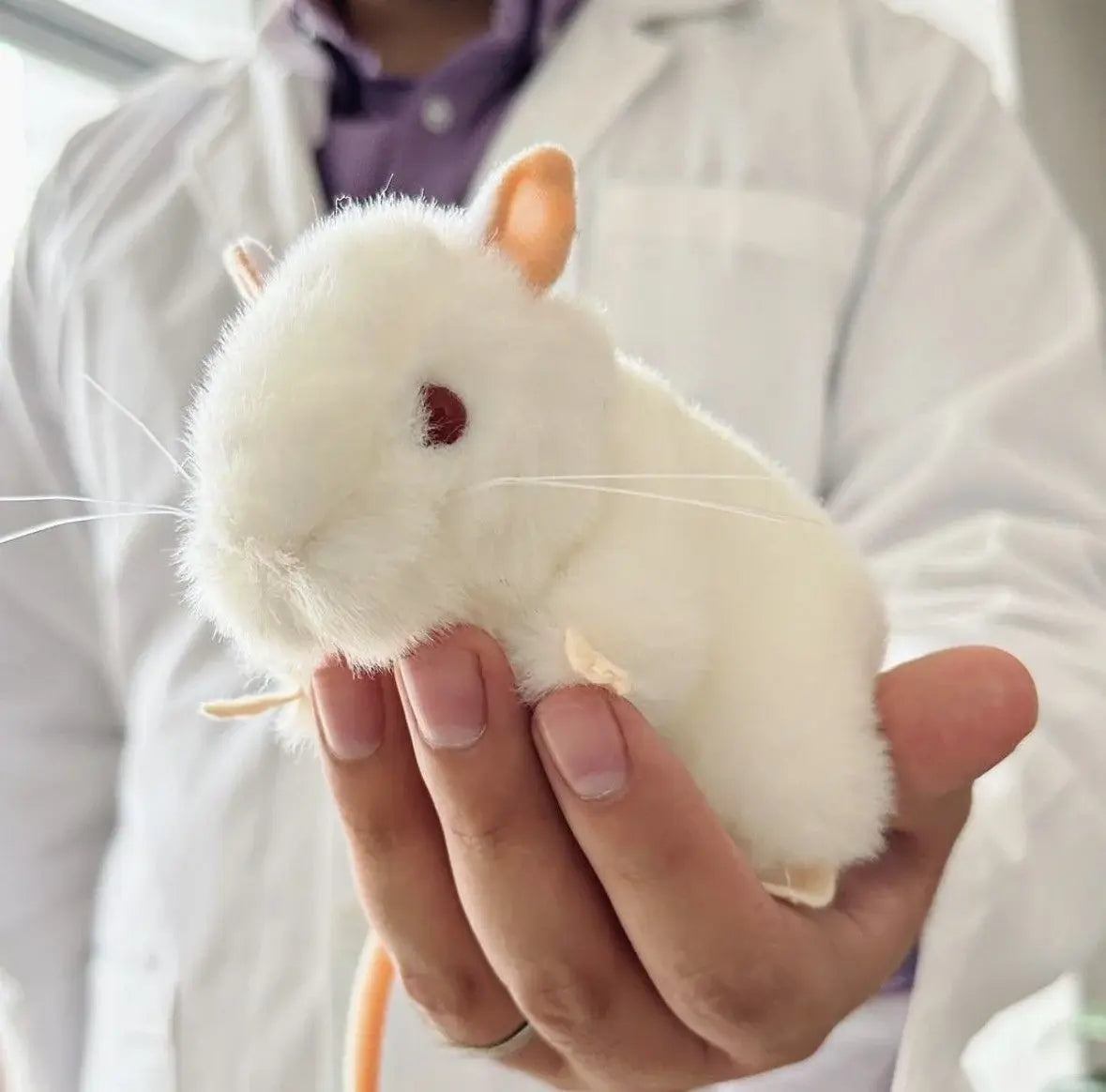
  • White Lab Mouse (BALB/c) Plush

    10 items left

    This adorable White Lab Mouse plush features high quality materials and a realistic design, making it a memorable gift for scientists, educators, medical lab professionals, students, and anyone fascinated by lab life.

    Each plush includes an educational information card with fascinating facts about lab mice and their critical role in scientific research.

    Specifications

    • Size: 6" x 6" x 3"
    • Includes: Educational information card
    Materials & Care

    Plush from all new materials. Stuffed with polyester fiber fill. Surface washable: sponge with water & soap, air dry.

    Packaging

    Each plush microbe includes a printed card with fun, educational and fascinating facts about the actual microbe or cell.

    Safety Standards

    Every product meets or exceeds U.S. and European standards for safety. For ages 3 and up.

    All About White Lab Mouse (BALB/c)

    FACTS:

    The word mouse derives from the Sanskrit "mush" meaning to "steal." But if the race of mus musculus pinched grain from our forebears, it has more than made up for it in modern times: the lab mouse is the unsung hero of modern medicine, and there are millions of people who literally couldn't live without it.

    Of course, untold numbers of fruit flies and the nematode C. elegans have also made the ultimate sacrifice and rendered incalculable service to humanity. But for many questions relating to genetics, immunology, cancer research, and drug testing, only a mammalian relative is close enough on the family tree to provide answers. And as far as mammals are concerned, mice are among the smallest; they breed and mature rapidly (and prolifically); they have gentle fathers who do not harm their young (which facilitates breeding); and they have an easy, pleasing disposition.

    Nevertheless, because we feel a common bond with our murine relatives, using them without their consent to harvest the tree of knowledge raises moral and ethical concerns. Indeed, certain mice-families have given hundreds of generations of their kin for our account. (The BALB/c family, whose progenitor came to the attention of Dr. Halsey J. Bagg in an Ohio pet dealership in 1913, has provided some of the noblest service of all.)

    But regardless of whether our mortality justifies the morality, we should certainly acknowledge and be grateful for the magnitude of the debt that we owe to these tiny creatures.

    And perhaps a bit of cheese from time to time isn't so out of line after all?

    More Nerdy Details

    The white lab mouse (Mus musculus, BALB/c strain) is an albino inbred laboratory mouse and one of the most widely used animal models in biomedical research. Because mice are mammals that share much of their genome with humans, breed rapidly, and have a gentle disposition, they are essential for studies in genetics, immunology, cancer research, and drug testing.

    Where did the name come from?

    The word "mouse" traces back through Latin (mus) and Greek (mys) to a Proto-Indo-European root *muHs-, related to the Sanskrit mush ("to steal"). The scientific name Mus musculus is Latin for "little mouse." BALB/c stands for "Bagg ALBino, substrain c," named after Halsey J. Bagg, who first acquired the founder mice in 1913.

    Actual Size of the real thing

    Adult BALB/c lab mice are typically 7 to 10 cm long (body), with a tail of similar length, and weigh roughly 20 to 30 grams, small enough to sit comfortably in the palm of a hand.

    Biological System

    Complete organism (Class Mammalia, used as a research model)

    How many are there?

    Tens of millions of lab mice are used in biomedical research worldwide each year; the wild house mouse (Mus musculus) is found on every continent except Antarctica.

    Where It Lives

    Lab mice live in carefully controlled animal research facilities at universities, hospitals, pharmaceutical companies, and government labs around the world. Their wild ancestor, the house mouse (Mus musculus), is found on every continent except Antarctica and is one of the most successful mammals on Earth.

    Historical Notes

    The BALB/c strain traces back to 1913, when Dr. Halsey J. Bagg acquired the founder albino mice from an Ohio pet dealer. He began the inbreeding program, and the line was later developed into the modern BALB/c strain (and substrains) used today, contributing to countless advances in immunology, oncology, and vaccine development.

    Fascinating Facts

    Mice share roughly 85% of their protein-coding genes with humans, which is why they are so valuable in genetics and disease research.

    BALB/c mice in particular are famous for their role in monoclonal antibody production: the original hybridoma technique that won the 1984 Nobel Prize in Medicine was developed using BALB/c spleen cells.

    Millions of people alive today owe their treatments, and in many cases their lives, to discoveries made possible by lab mice.

    Carbon-neutral shipping on all orders
    12281kg
    shipping emissions removed
    That's like...
    31438
    miles driven by an average gasoline-powered car
    We fund innovations in...
    Direct Air Capture
    Bio Oil
    Mineralization