
How to Choose the Best Lab Coat for Women
Ninety-seven percent of women in our Lab Coat Project survey reported a fit problem with their lab coat. Not a color complaint, not a style gripe. A fit problem.
Many women described the psychological impact of swimming in poorly fitting unisex coats. As one petite researcher explained in our survey data, "Being swallowed by a giant lab coat makes you feel like you are dressing up in a costume. It creates a strange imposter syndrome that whispers in your ear 'you're not a real scientist'".
This guide will show you how to choose the perfect lab coat, so you can focus on science, not adjusting your sleeves.
Why Fit Matters for Women’s Lab Coats
Most lab coats are designed with a “one-size-fits-all” approach that actually fits no one perfectly. Sleeve length and shoulder fit are the most common complaints: 92% of women reported problems with their sleeves alone.

The Petite Dilemma
Petite women have the hardest time finding a lab coat that fits well: 73% reported their lab coats as too boxy at the waist, 50% said they were too boxy at the shoulders, and 48% said they were too long. For these women, the struggle often results in wearing coats that are dangerously oversized.
As one scientist described the frustration: "I look like a child playing dress up because the smallest option is a MENS SMALL. The bottom of the coat is like a foot off the ground max". Another shared, "As a short woman, I am tired of not having a properly fitting lab coat. Even the smallest lab coat almost goes to my ankles". When scientists are forced to swim in extra fabric, it creates an ongoing safety hazard at the bench.

The Curvy & Plus-Sized Struggle
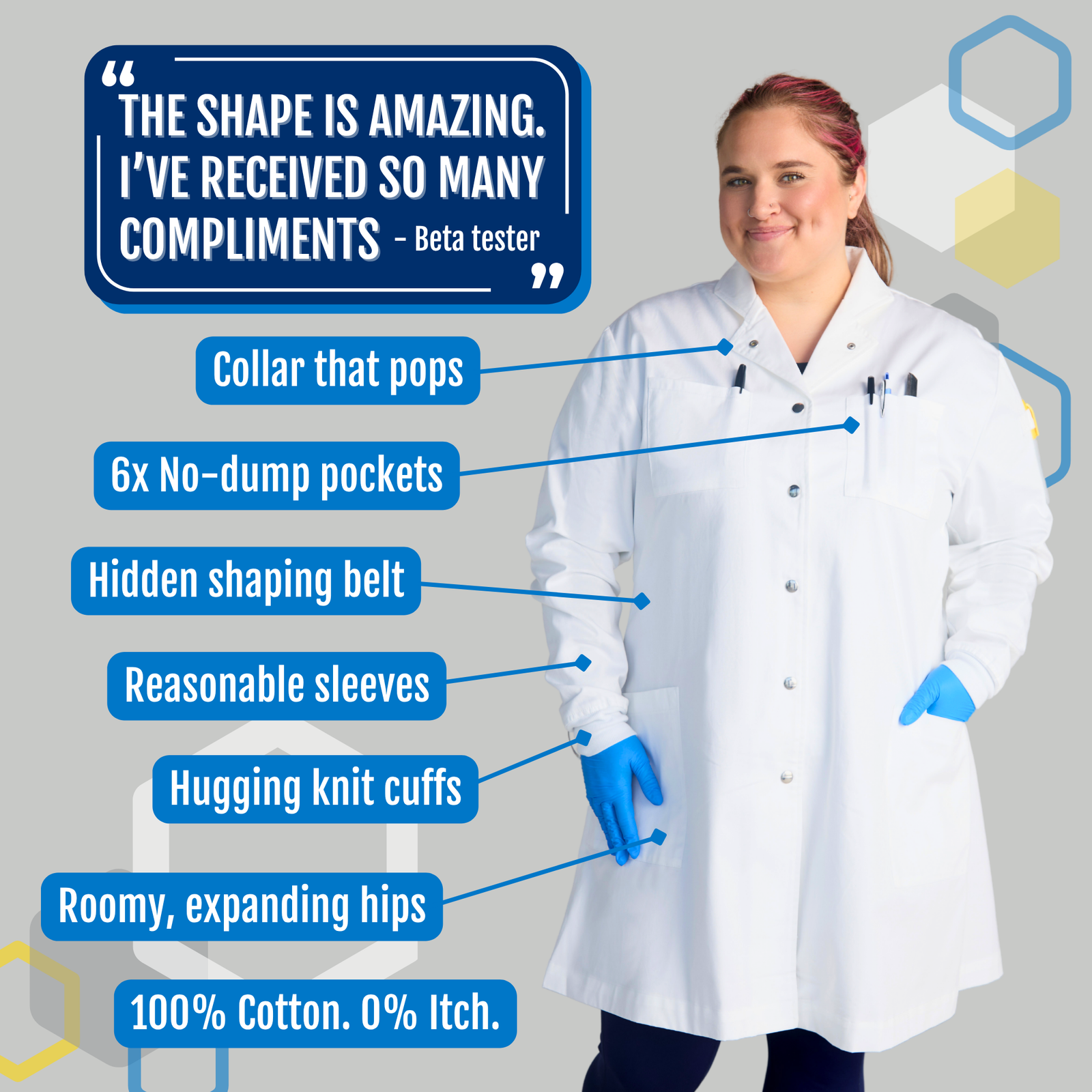
Plus-sized and curvy women face an equally frustrating dilemma: choose a coat that fits the shoulders but leaves the hips exposed, or size up and swim in excess fabric everywhere else. Most unisex lab coats are built like a straight cylinder, which fails to accommodate a female figure.
One researcher frankly stated, "If it’s big enough to button over my ass it’s too big everywhere else, if it fits elsewhere it won’t fit over my ass." This lack of inclusive sizing takes a real emotional toll on professionals.
One curvy scientist shared, "I have to choose between buttons popping open at my waist and hips if I bend, sit or take too long a stride OR I can have the hips fit and button up but up top I look like a hot air balloon... Either way I feel bad about myself; like science fields aren’t meant for 'fat' people". Another added, "The plus sized market is non existent to abysmal. I'm fat. I am a scientist. I am adorable. I deserve a well fitting coat."
Lab coats made for women should consider:
-
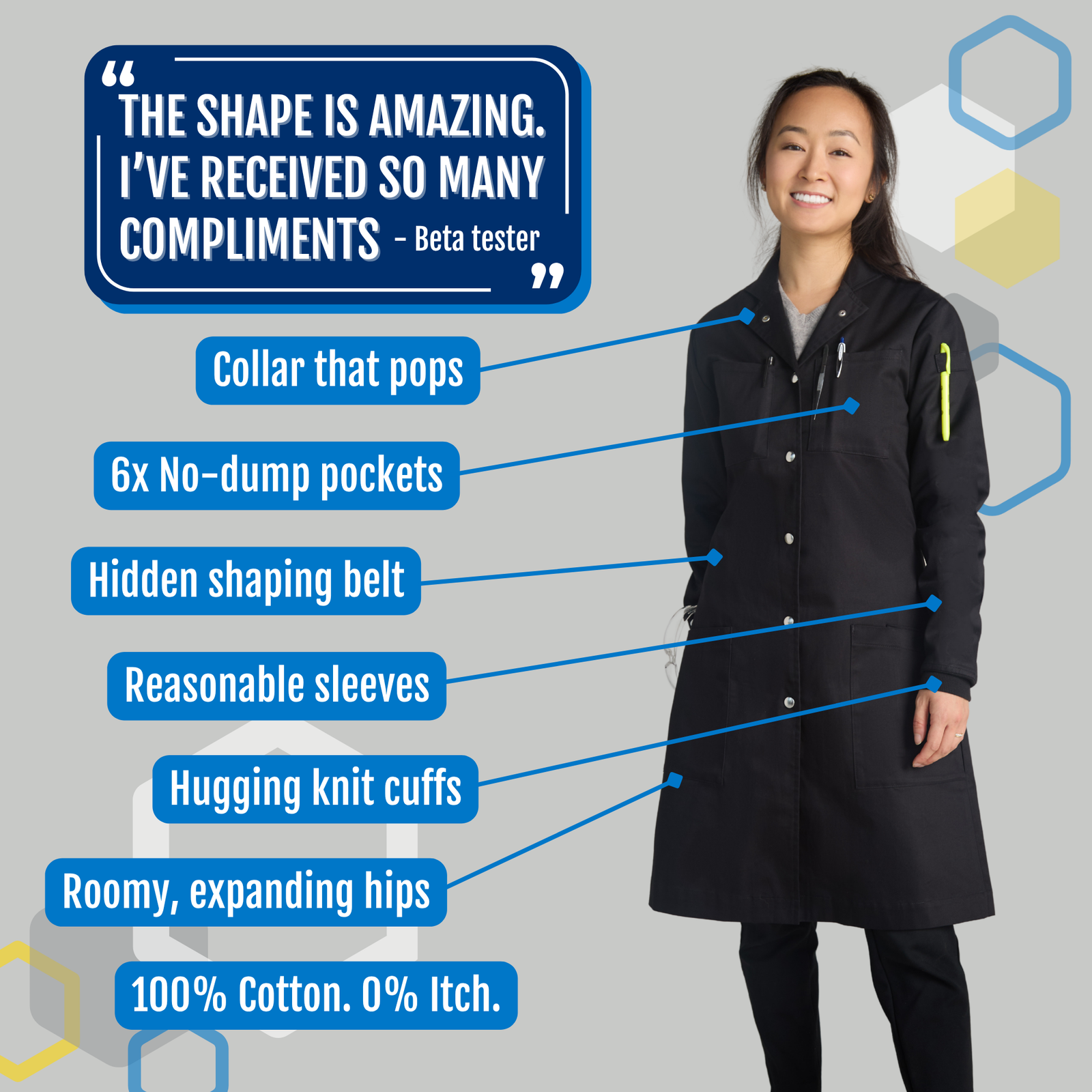
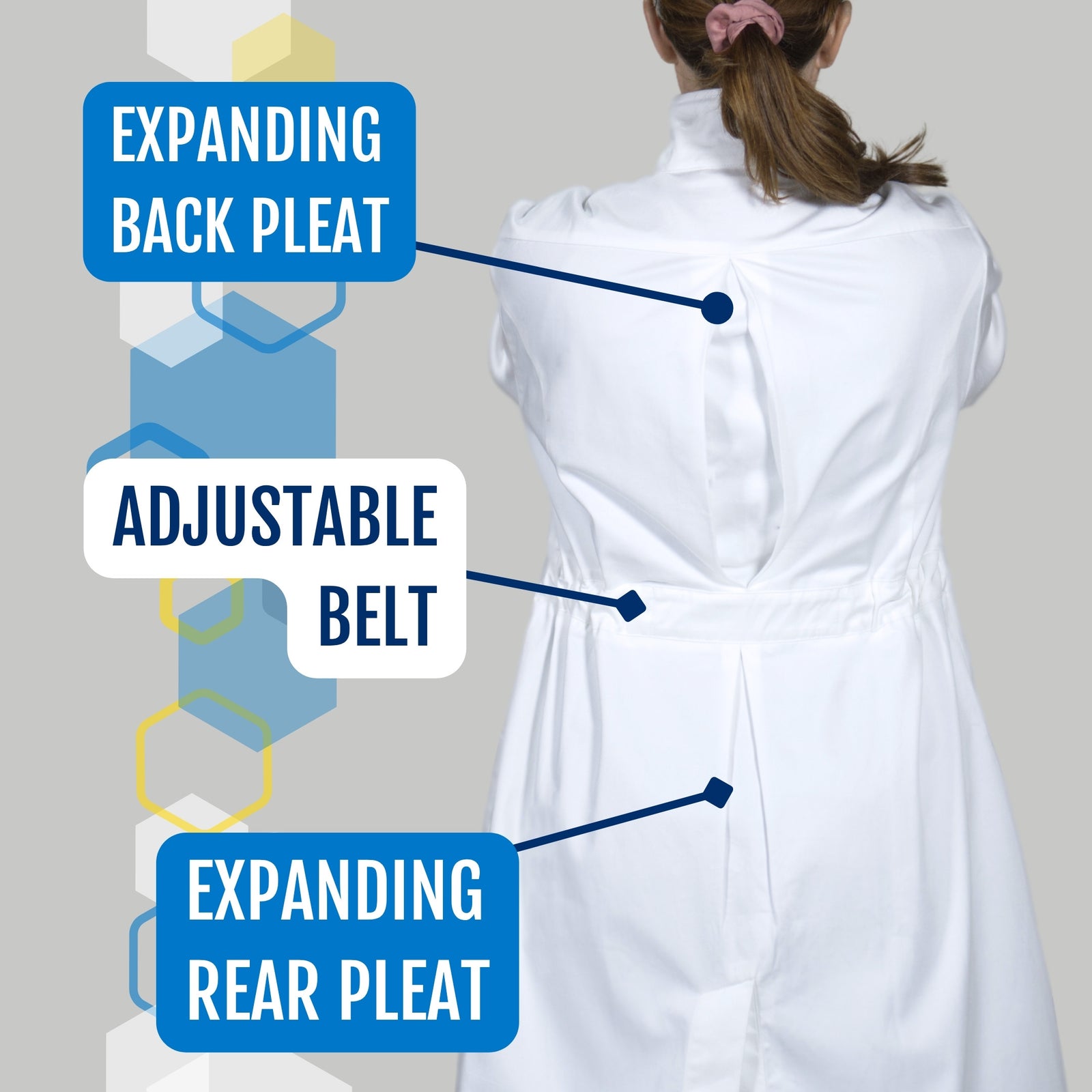
An adjustable belt for handling excess fabric
-
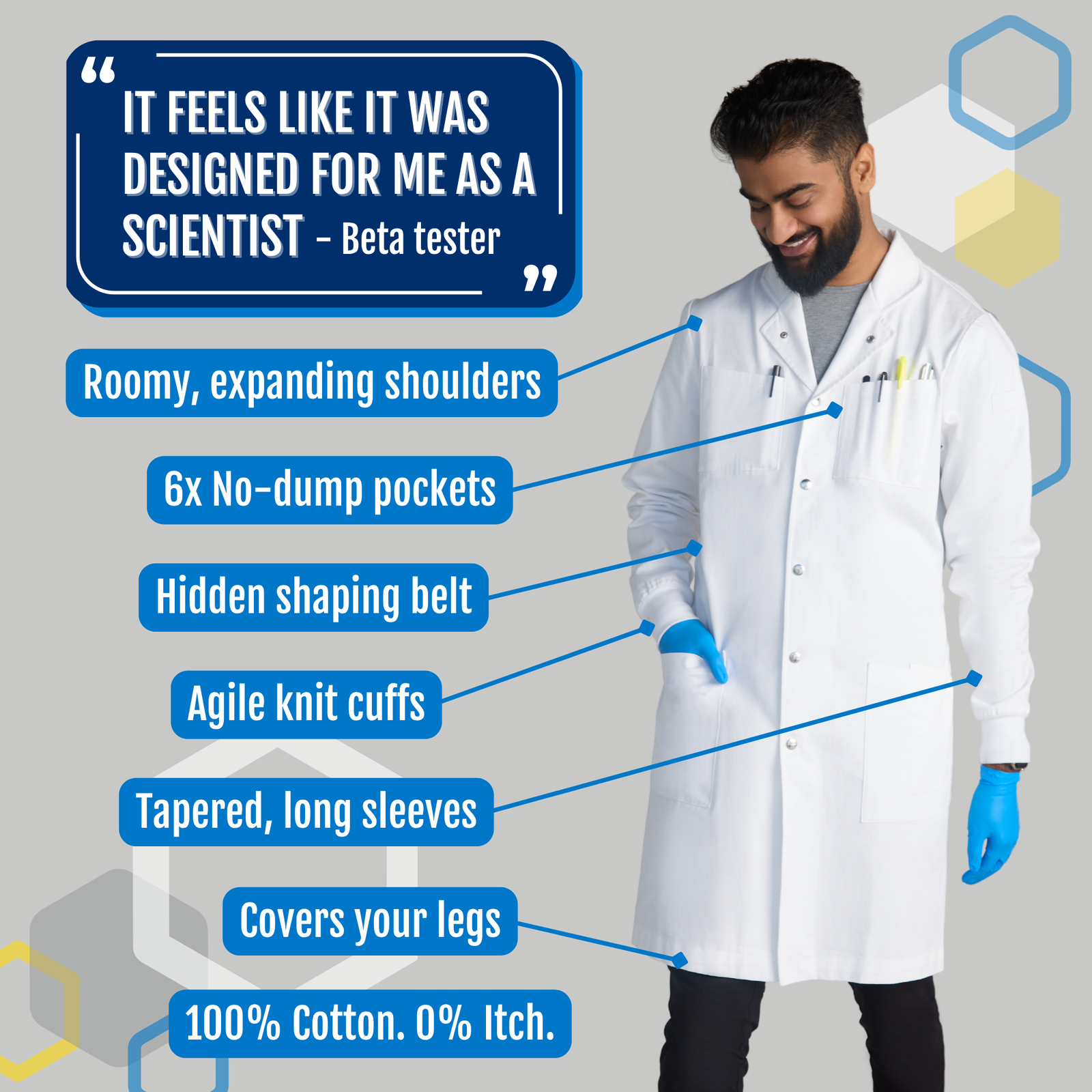
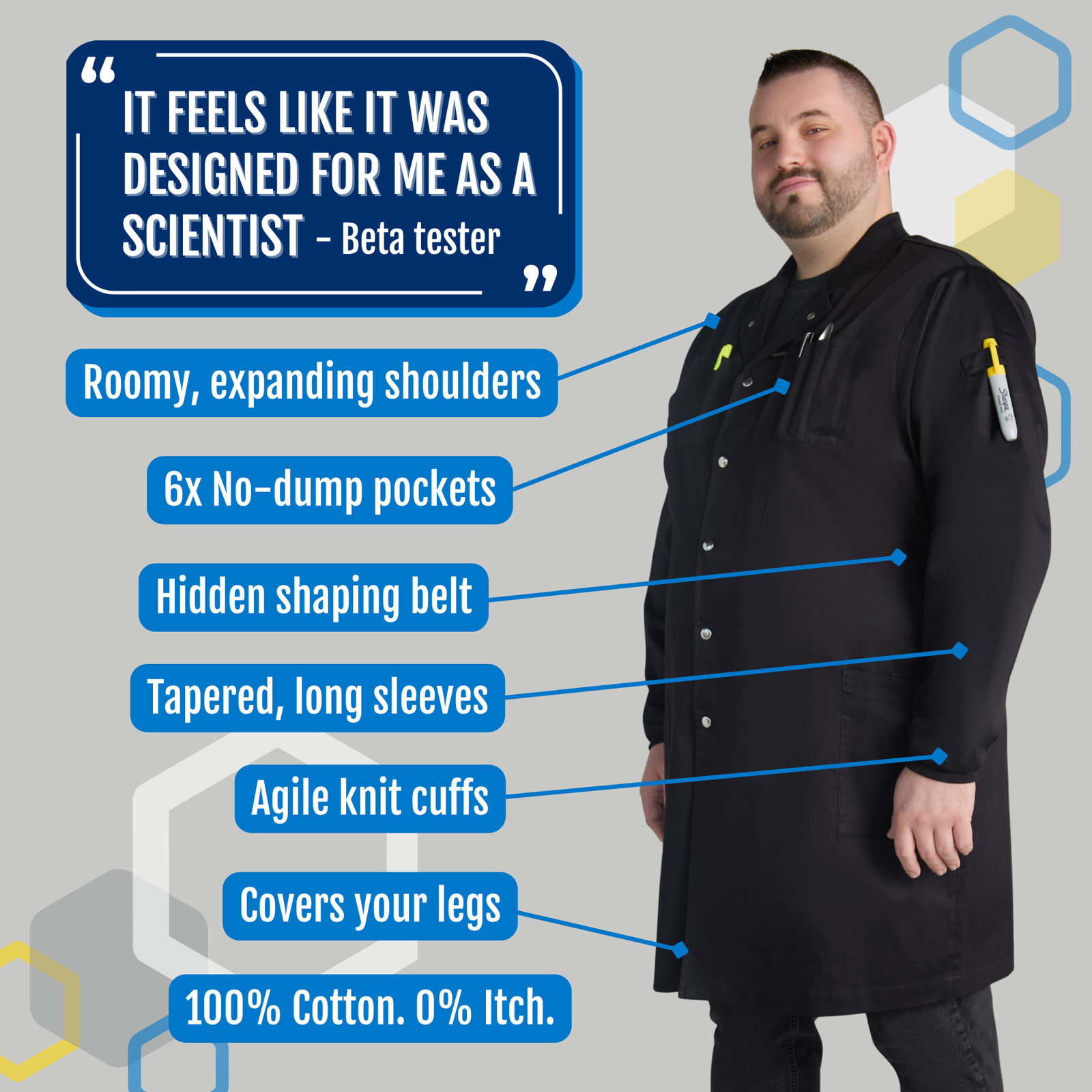
Tapered forearms for cuffs that don’t hang down and cause new accidents
-
Wider cut at the hips so the bottom snaps won’t pop open when you sit or bend
-
Sizing down to XXS so petite women aren’t forced to wear oversized “wizard robes”

Key Features to Look For:
-
Material & Comfort: Breathable, durable fabrics keep you comfortable during long lab sessions. However, remember that for many chemists and professionals working with flames or solvents, 100% cotton is an absolute requirement.
-
Length & Coverage: Knee-length coats offer maximum protection, while shorter styles increase mobility for clinical work. Choose what works for your environment.
-
Pockets & Functionality: Over 50% of survey respondents said they wanted more functional pockets. Look for pen, phone, and instrument pockets for easy access during experiments.
-
Style & Colors: While traditional white is classic, about 35% of scientists wanted more color options. Choose a coat that fits both your lab’s rules and your professional style.
How to Choose the Right Size
Proper sizing is key. Survey feedback showed petite and curvy women struggled the most with standard lab coats, often swimming in fabric or finding sleeves too long. Here’s how to avoid that:
-
Measure shoulders, bust, waist, and sleeve length
-
Compare your measurements to the size chart
-
Consider adjustable or stretch options if available
Lab Coats for Pregnancy: What to Look For
Many scientists also told us that major life stages make the problem even worse. Pregnancy, for example, can make standard lab coats completely unusable halfway through a term or research project.
As one mother noted: "When I was pregnant, I had to make a maternity lab coat by cutting up two lab coats and sewing the top of an XS to the bottom of an XL coat".
Pregnant scientists face unique challenges:
-
Tightness through the midsection and chest
-
Restricted movement when bending or reaching
-
Loss of safe coverage if the lab coat is forced open in the front
A maternity lab coat solves these issues by incorporating extra room through the torso, an adjustable fit as pregnancy progresses, and proper coverage to maintain lab safety standards.
🍼 See our Alma maternity lab coat

Top Mistakes to Avoid
-
Buying “one-size-fits-all” lab coats
-
Prioritizing style over comfort or protection
-
Ignoring lab safety standards
Tip: Referencing The Lab Coat Project survey, many women underestimated the importance of sleeve fit and pocket placement. Paying attention to these details can drastically improve comfort.
Why Women-Specific Lab Coats Are Worth It
Women-specific lab coats aren't a luxury add-on, they solve the exact problems above: hip room instead of a straight cylinder, a belt that actually cinches, cuffs that don't dangle. Here's what that looks like once it's on:
"In my 15+ years as a professional scientist, I have never worn a more comfortable lab coat. This may be TMI, but I'm curvy. Like popping buttons or snaps on normal lab coats curvy. For once, my labcoat stayed safely fastened and did not pinch or pull, it actually fit. I will be recommending these labcoats to all my colleagues." (Verified Genius Lab Gear customer)
Every sizing decision in the Curie came from that same survey data. Scientists told us exactly what was wrong with the coats they'd been wearing. We took notes.
Where to Buy Women’s Lab Coats
Genius Lab Gear designs lab coats specifically for women, sizes XXS-4XL, in black and white, with embroidery options. Here's where to find each style:
Curie White
Curie Black
Alma (Maternity)
FREQUENTLY ASKED QUESTIONS
Do you offer lab coats for women of all sizes?
Our collection includes a wide range of sizes to fit different body shapes. Use our size finder to find your size easily:
https://geniuslabgear.com/pages/womens-lab-coat-size-finder
Can I customize my lab coat?
We offer embroidery options to personalize your coat. Learn more here:
https://geniuslabgear.com/pages/custom-lab-coat-embroidery
How do I care for my lab coat?
Most of our coats are machine washable. Follow the care instructions for longevity:
https://geniuslabgear.com/pages/lab-coat-safety-care-instructions
Why is a properly fitted lab coat important?
Fit affects mobility, safety, and mental comfort. Ill-fitting coats can contribute to stress during long lab hours. Survey feedback confirms that sleeve and shoulder issues are the most common complaints among women.
Lab Coats designed by scientists
Our lab coats were designed from the feedback of over 1000 scientists as a part of The Lab Coat Project. Designed specifically for scientific research, especially chemistry and microbiology labs, with high-end features at an affordable price. Buying for a group of 10 or more? Request a group order quote here to access our group discounts.













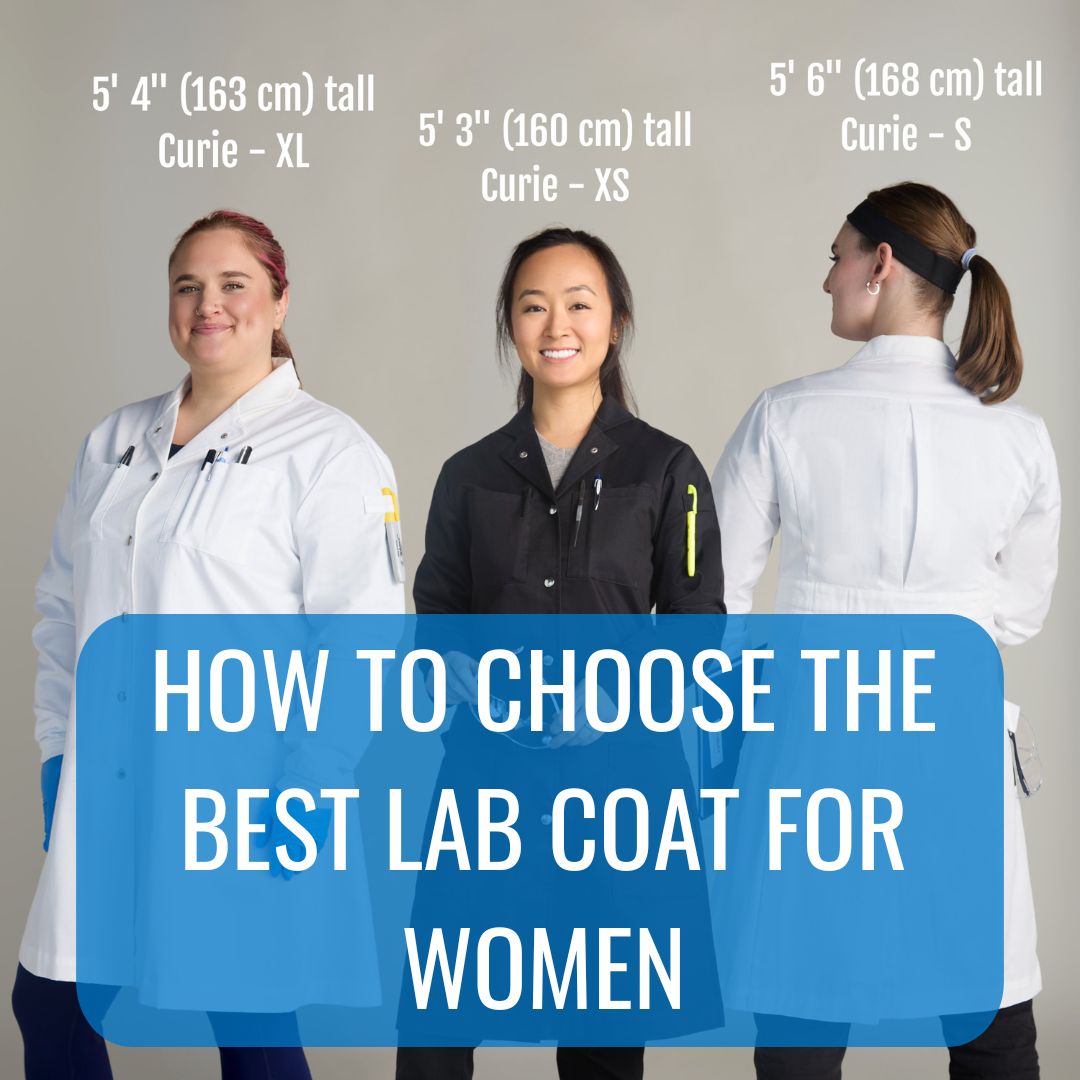

How to Choose the Best Lab Coat for Women
Ninety-seven percent of women in our Lab Coat Project survey reported a fit problem with their lab coat. Not a color complaint, not a style gripe. A fit problem. This guide will show you how to choose the perfect lab coat, so you can focus on science, not adjusting your sleeves.
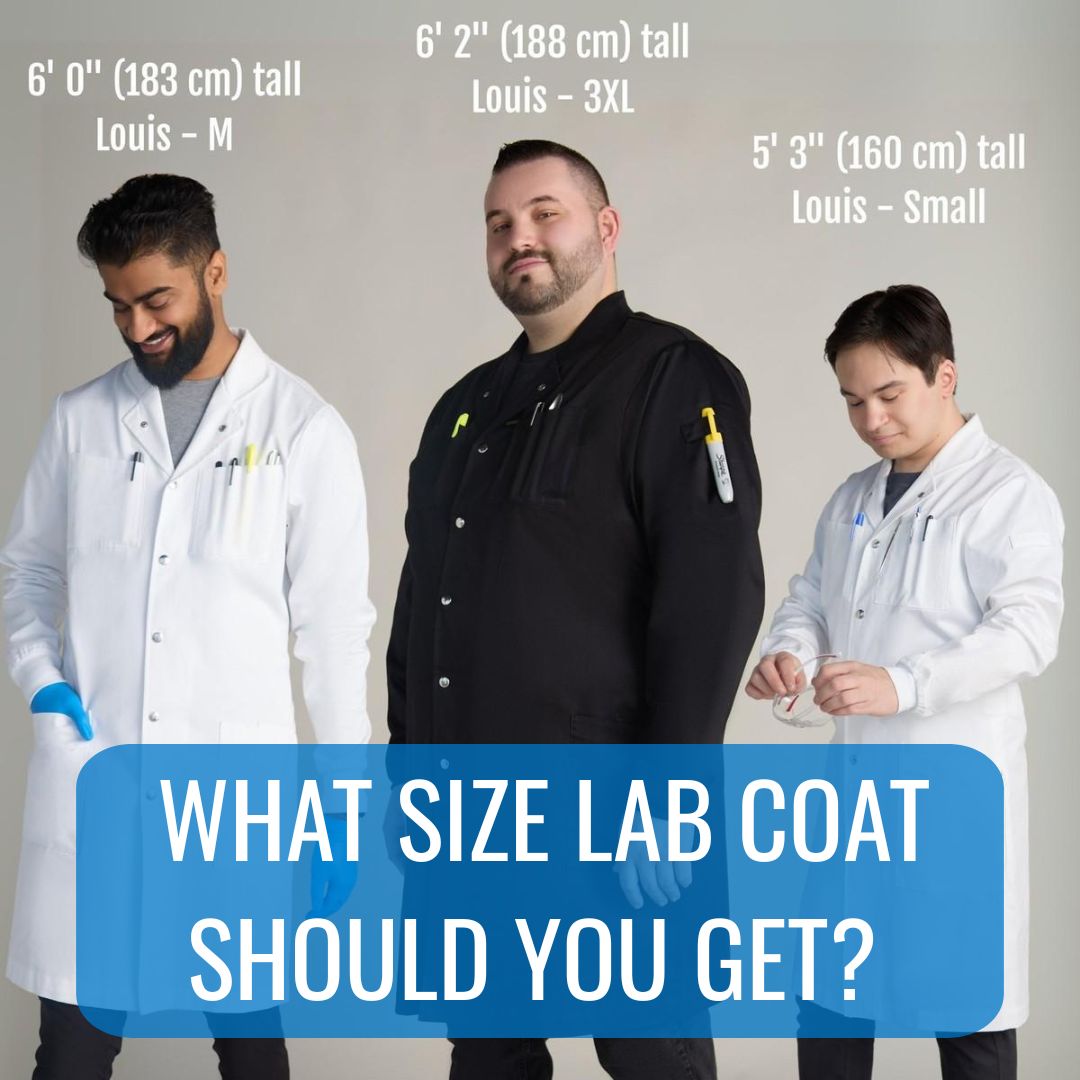

What Size Lab Coat Should You Get?
Most lab coats fit badly because people order their regular clothing size instead of measuring. Here's exactly how to measure your chest, waist, and hips, what to do if you land between sizes, and why the Louis and Curie fit so differently.
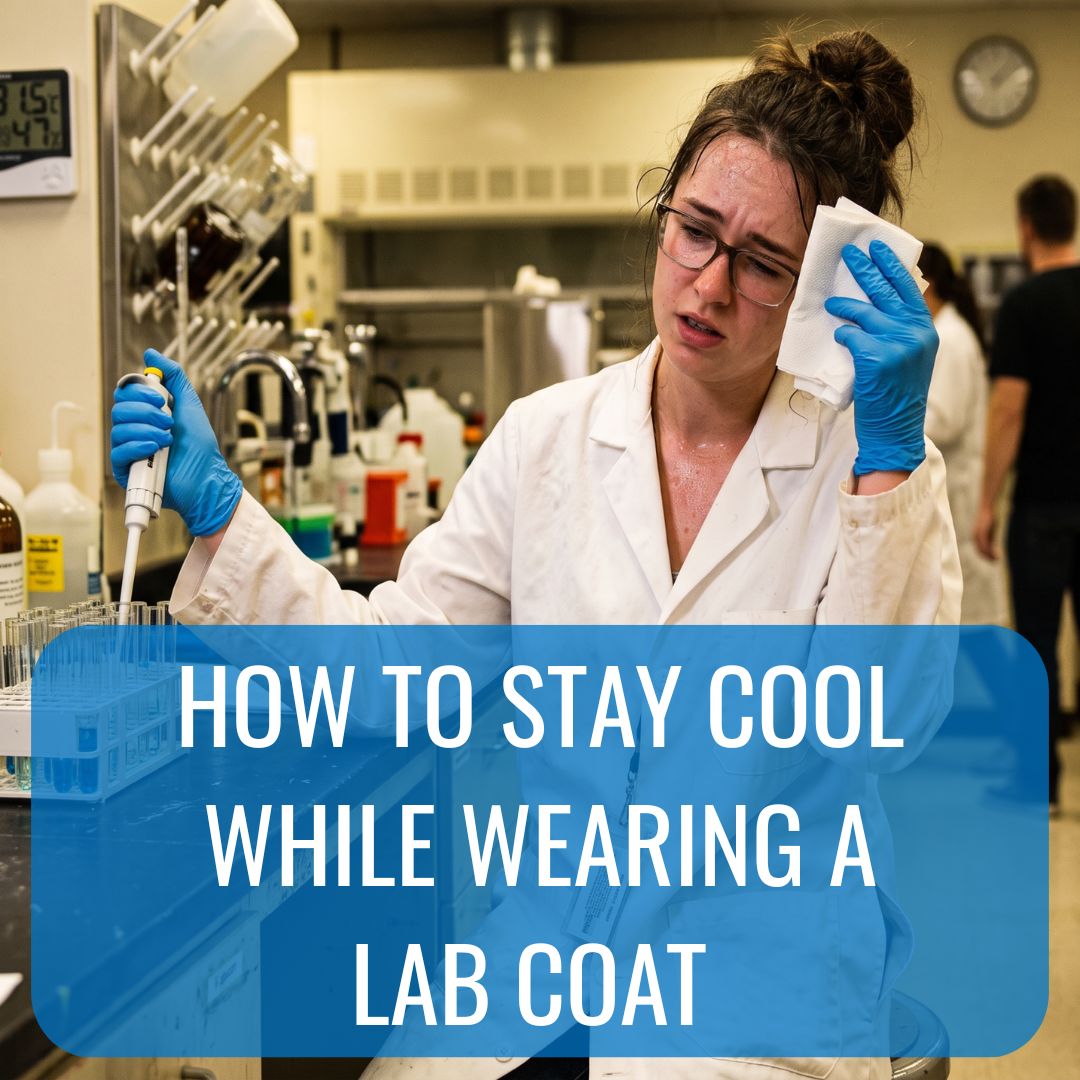

How to Stay Cool While Wearing a Lab Coat All Day
Stay comfortable during long days in the lab with practical, safety-conscious tips to reduce heat and sweat while wearing a lab coat. Learn what to wear, what to avoid, and how to stay cool without compromising protection.